
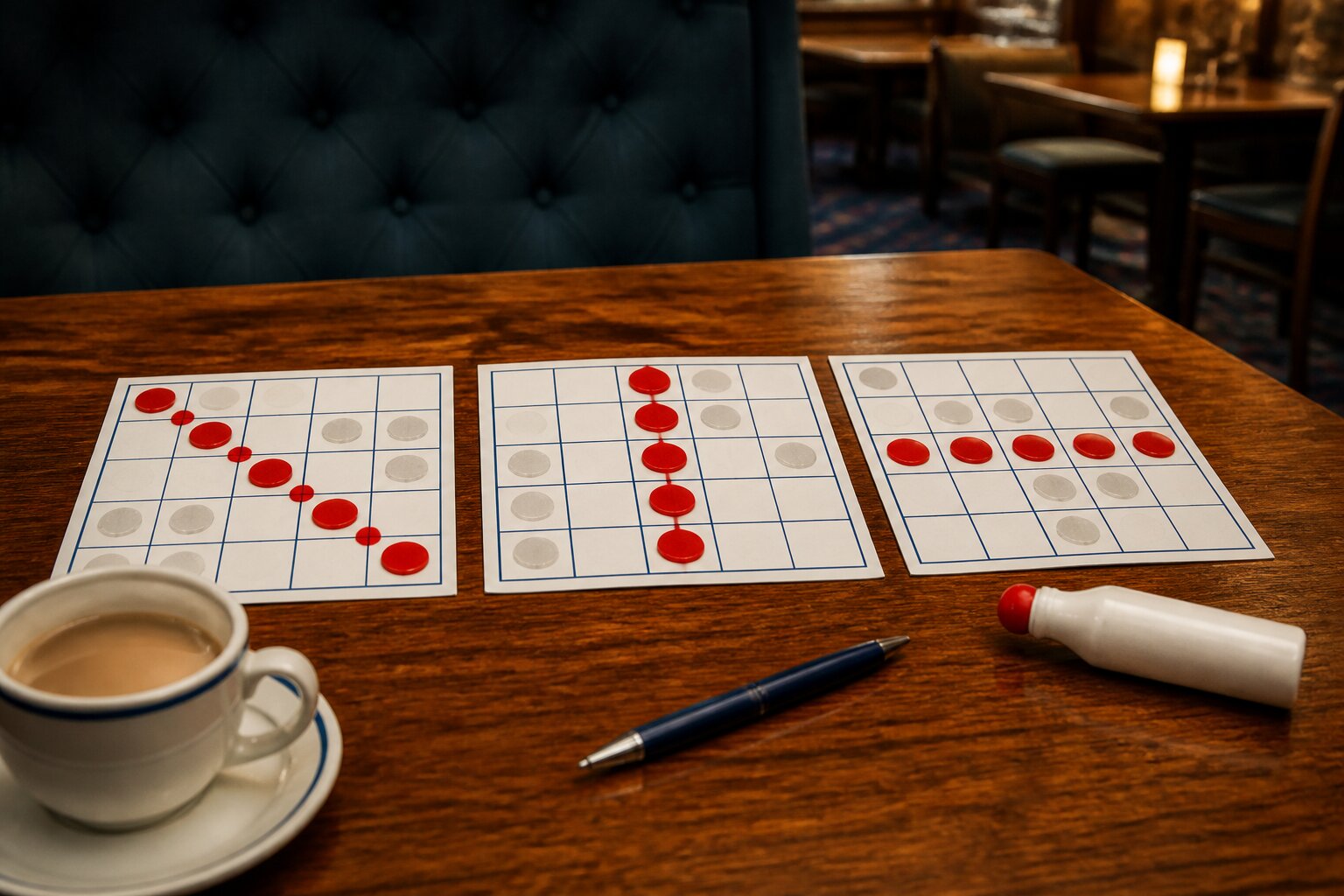
Ever wondered why someone shouts 'Bingo!' when you’re still waiting for your last number? It comes down to the pattern being played. Different games use different win patterns, so knowing how they look helps you spot wins faster and stay one step ahead in the moment.
This guide explains the most common patterns — diagonal, vertical and horizontal — and how they appear across popular bingo formats. Read on to make sure you recognise each pattern the next time you play.
Ready to see how lines and shapes translate into winning cards? We’ll start with an overview of the main patterns you’ll meet.
What Are the Main Bingo Win Patterns?
Win patterns define when a player is entitled to call “Bingo!” and claim a prize. While diagonal, vertical and horizontal lines are the familiar basics, many games add shape or multi-line patterns that change how a round is played. Each session will make the valid patterns clear at the start, so checking the rules is always worthwhile.
Typical patterns include horizontal lines (a full row across the card), vertical lines (a full column down) and diagonals (corner-to-corner runs). Other common examples are four corners — marking the four corner squares — and full house or blackout, which requires every number on the card to be covered. Some games offer patterns such as L-shapes, squares, or small 2x2 blocks known as postage stamps.
These categories cover most play styles in halls and online rooms, but the exact list and prize structure depend on the game you choose. Next, we’ll look at diagonal wins in detail so you can spot one quickly.
Diagonal Win Patterns Explained
A diagonal pattern is a straight line of marked numbers that runs across a card at an angle, either from the top-left to the bottom-right or from the top-right to the bottom-left. On a standard 5x5 card, that means five positions in a single slanted line must be covered.
Many 5x5 games include a free space in the centre, which counts as a filled square. When the free centre is used, one diagonal will involve only four called numbers plus the free space. Diagonal wins are common in 75-ball formats and are often shown as an option among several line and shape wins for a round.
Visually, diagonals are easy to scan for once you know what to look for: track the corners and the centre as key anchors. After understanding diagonals, the next section will describe vertical wins and how they compare in terms of visibility and prize roles.
Vertical Bingo Wins: How Do They Work?
Vertical wins require all the boxes in a single column to be marked from top to bottom. On a 5x5 card this is a straightforward column of five filled squares; in smaller or larger grids the same idea applies proportionally.
Because columns are grouped by number ranges in many card layouts, players can sometimes anticipate progress down a column when a cluster of related numbers has already been called. Vertical lines appear as standard win options in many game types and are particularly simple to verify visually during play.
Understanding how columns behave on the card helps when multiple line patterns are available in the same round. With that in mind, the next section examines horizontal lines, which form the other primary axis of winning patterns.
Horizontal Bingo Wins: A Closer Look
Horizontal wins occur when every square in a single row is marked across the card. On a 5x5 grid that means five filled squares in a straight line from left to right. In UK 90-ball bingo a horizontal row corresponds directly to the familiar ‘One Line’ win; there are also prizes for two-line completions and the Full House, which covers the whole ticket.
Rows are often the first wins paid out in many sessions because they’re both easy to spot and easy to verify. Players often follow the progression of rows across different tickets to judge how a game is developing, especially in rounds that award multiple horizontal prizes.
Horizontals, verticals and diagonals together create the basic vocabulary of bingo winning patterns, and the next section compares how each one affects the player experience.
Comparing Diagonal, Vertical and Horizontal Patterns
Each pattern creates a different visual cue on the card, which affects how quickly a player can spot a potential win and how they follow the game.
Visual differences
- Diagonal: Runs from one corner to the opposite and usually crosses the free centre space on 5x5 cards.
- Vertical: A single column from top to bottom, often grouped by number range on standard cards.
- Horizontal: A full row from left to right and the basis for one-line awards in 90-ball games.
Impact on gameplay
Horizontal lines are commonly used as initial win stages in many formats, which makes them key to prize structure in sessions that award multiple payouts per round. Vertical and diagonal wins add variety, keeping play engaging because they demand attention to different axes of the card. In formats with multiple valid patterns, players tend to scan by rows, then columns, then diagonals to make checking fast and reliable.
Knowing how a pattern looks and how it fits into a game’s prize ladder helps you follow results quickly during play. The following section explains how these patterns change across different bingo variants.
Are Pattern Wins the Same in Every Bingo Variant?
Pattern rules vary between bingo variants because card size and prize formats differ. In UK 90-ball bingo, the standard progression is one line, two lines and Full House, all referring to horizontal rows on a three-row ticket; diagonal or column wins are not part of the traditional 90-ball structure.
In 80-ball bingo the 4x4 grid lets operators offer wins for lines in any direction as well as a range of shape patterns such as squares or corners. The smaller grid makes some patterns quicker to complete and changes how operators balance prizes.
75-ball bingo tends to be the most flexible, with many rooms and online games using a 5x5 card and offering a broad array of shapes — crosses, letters, or blackout — alongside the three basic line types. Online platforms often introduce custom or themed patterns, and they always show the valid wins and payouts before a round begins.
Checking the game rules before play ensures you know which patterns are live and how prizes are structured, so you can follow play with confidence and enjoy the session within your own limits.
Discover Online Slots at Rose Slots
We invite you to explore the fantastic selection of online slots and casino games available on our site. With a wide variety to choose from, there’s something for everyone to enjoy in a friendly and welcoming environment.
Getting started is simple—just set up your account, make a deposit, and you’ll be able to play your way. We look forward to welcoming you and hope you have a brilliant experience with us.
**The information provided in this blog is intended for educational purposes and should not be construed as betting advice or a guarantee of success. Always gamble responsibly.