
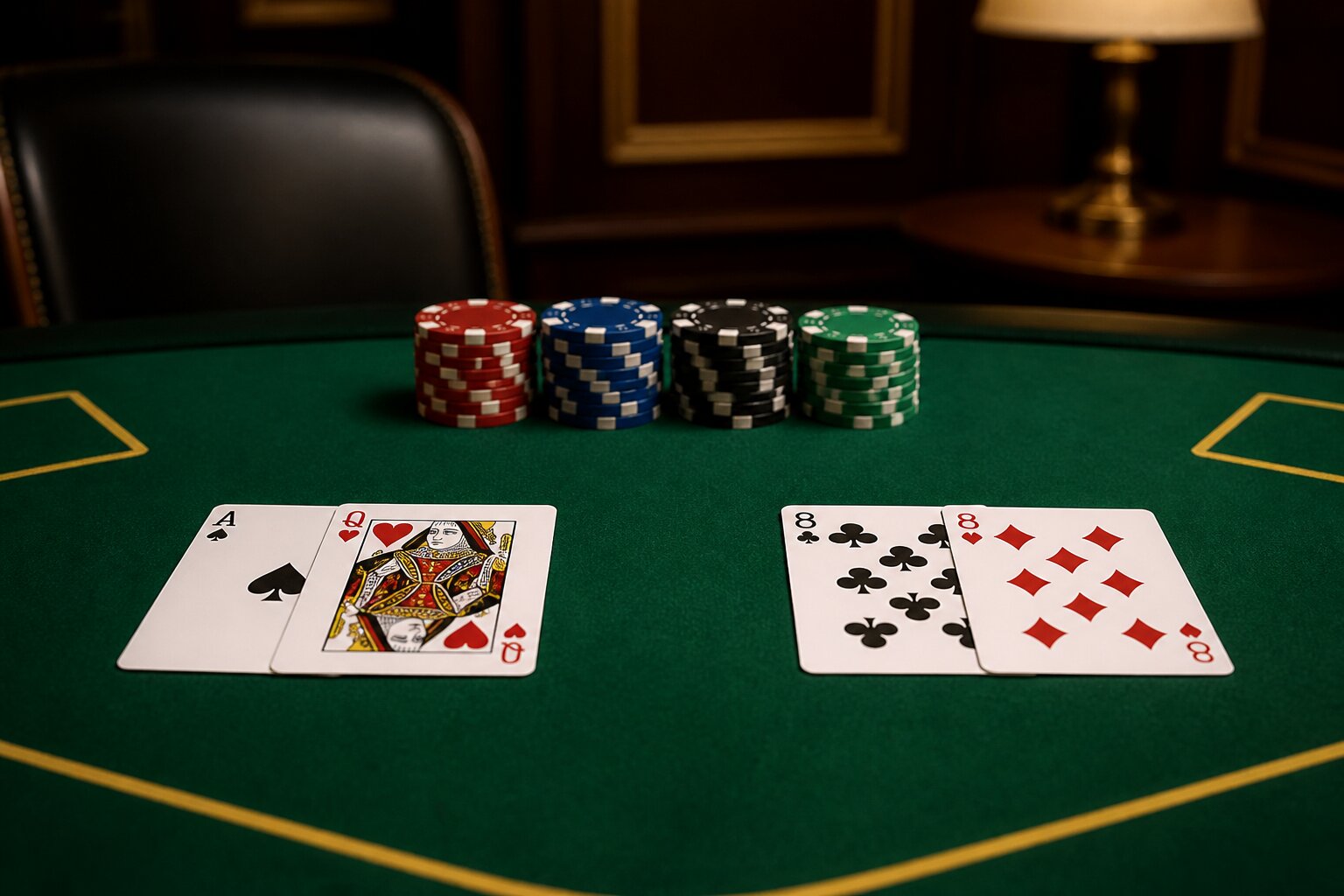
Blackjack is one of the most popular card games around, but have you ever heard of Blackjack Switch? This twist on the classic game is gaining attention at UK casinos thanks to a few distinctive rules and brisk play.
If you've wondered how Blackjack Switch compares with traditional blackjack, this article will explain the key differences, the gameplay basics and how each variant changes your decision-making at the table.
Read on to see how a single rule change can reshape the game and help you decide which version suits you best.
What Is Blackjack Switch?
Blackjack Switch is a variation of classic blackjack that asks players to handle two hands simultaneously. After both hands are dealt, you may swap the top card between them. That simple option creates new strategic choices—sometimes you can turn two mediocre hands into two stronger ones.
For example, holding 5–10 on one hand and 6–Ace on the other, swapping the 10 and Ace could produce 15 and 16, or other combinations depending on the cards. That flexibility is the defining feature of the variant.
There are other rule changes too. Notably, if the dealer totals 22, that result does not behave like a bust: main player bets push instead of winning. To balance the switching advantage, Blackjack Switch also usually pays blackjacks at even money rather than the 3:2 that traditional tables often offer.
While the mechanics are straightforward, the strategic choices become richer because you must evaluate two hands together rather than treating them independently.
How Does Traditional Blackjack Work?
Traditional blackjack, often called 21, is a simple contest against the dealer. Each player receives two cards, as does the dealer—one face up, one face down. Number cards count at face value, face cards are worth 10 and Aces can be 1 or 11.
Players decide whether to take more cards or stand with their current totals; the dealer follows fixed drawing rules and must typically draw until reaching at least 17. If a player’s total exceeds 21, that hand busts and loses. Ties between player and dealer are pushes.
The straightforward structure of classic blackjack makes it easy to learn and quick to play. Its established rules and conventional payouts are part of the reason it remains a staple at most casinos.
Key Rule Differences Between Blackjack Switch & Regular Blackjack
Several rule differences shape how each game plays and the decisions you face at the table. These changes affect different aspects of play, so it helps to know them before you sit down. In particular, they influence:
- the strategy choices you make during a round
- the overall house edge players face
- how you manage your bankroll across hands
- the pace and complexity of play at the table
Knowing these points helps you make more informed decisions and understand why basic strategy shifts between the two games.
Two Hands
Blackjack Switch requires playing two hands at once, while regular blackjack uses a single hand per player. Managing two hands together changes how you assess risk and reward, because a favourable outcome on one hand can offset a loss on the other, or vice versa.
Playing two hands also affects bet sizing and decision consistency. You may find yourself more willing to make marginal plays on one hand depending on the situation in the other, so thinking about both hands as a pair is important.
Switching Cards
The stand-out rule in Blackjack Switch is the ability to swap the top cards between your two hands after the deal. This single rule opens up many more possible outcomes and decision points compared with traditional blackjack.
In regular blackjack you cannot swap cards, so choices are based solely on the cards initially dealt and any subsequent hits. The switching option therefore requires a different mental approach and alters what constitutes an optimal play.
Dealer’s 22
In Blackjack Switch, a dealer total of 22 results in a push on main bets rather than being treated as a dealer bust. This rule reduces the frequency of outright player wins that would normally occur when the dealer busts.
By contrast, in standard blackjack a dealer bust typically leads to a player win if the player has not already busted. That difference changes expected returns and should be factored into strategy and risk calculations.
Blackjack Payouts
Blackjack Switch commonly pays even money for a blackjack, whereas traditional blackjack often pays 3:2. That reduction in payout is one of the compensating rules that offsets the benefit of the switching option.
Because blackjack pays less in Switch, a natural blackjack is relatively less valuable, which influences the relative strength of hands and how you prioritise certain plays.
Side Bets and House Rules
Both games can include side bets or table-specific variations. Side bets and local house rules can change payouts, qualifying hands, and other small but important details.
These extras vary between venues, so it is important to check the posted rules before you play. Always review the paytables and any unique conditions on the table to understand how they affect returns and strategy.
Why Do Players Choose Blackjack Switch Over Standard Blackjack?
Players attracted to Blackjack Switch often cite the added decision-making and variety. Having two hands to manage and the option to swap cards introduces a layer of tactical thinking that some find engaging.
Others enjoy the novelty. For players comfortable with classic blackjack, the variant represents a fresh challenge and a different learning curve. It’s not necessarily easier or more profitable, but it does change the rhythm and the kinds of choices you make each round.
If you like evaluating hands in tandem and adapting quickly, Blackjack Switch can be satisfying; if you prefer familiar, single-hand play, traditional blackjack may feel more comfortable.
How Do the Odds and House Edge Compare?
The house edge—the mathematical advantage the casino holds—varies between these two games because of their rule differences. Understanding these differences helps you weigh which game offers better value over time.
House Edge in Blackjack Switch
Blackjack Switch commonly shows a house edge around 0.58% to 0.72%. Two rule changes in particular push the edge above that of many standard blackjack games:
- the push on a dealer 22, which reduces the amount players win when the dealer reaches 22, and
- the even-money blackjack payout, which replaces the traditional 3:2 payout and reduces the return on natural blackjacks.
Small rule tweaks and the specific pay tables used by a casino can move the edge within that range. If you use basic strategy adapted for Blackjack Switch, you can keep the edge toward the lower end, but the game is still generally slightly worse for the player than standard blackjack under typical rules.
House Edge in Standard Blackjack
Standard blackjack typically offers a lower house edge, often near 0.5% under conventional rules and 3:2 blackjack payouts. That figure will change depending on table rules, such as whether the dealer hits or stands on soft 17, doubling permissions, re-splitting aces, and the number of decks in use.
When comparing the two games, remember that small changes to rules can produce noticeable differences in expected returns over many hands. Choose the game that fits how you like to play rather than chasing a marginal mathematical advantage, and gamble responsibly.
Is Blackjack Switch Available at UK Casinos?
Blackjack Switch appears at many UK-licensed online casinos and at select larger land-based venues. It is commonly offered alongside classic blackjack and other table variants on sites that host multiple game types, so you will often find it in the same area as other blackjack tables.
When deciding where to play, choose licensed, regulated operators to ensure protections around fairness and player safety. UK-licensed casinos are regulated by the UK Gambling Commission and must meet strict standards that help keep gameplay transparent and secure.
Before joining a site or placing real-money bets, check a few practical details so you know what to expect:
- Confirm the operator’s UK Gambling Commission licence and view licence details.
- Read the terms and conditions that apply to bonuses and gameplay.
- Check game information for returns to player and randomness statements where provided.
- Look for responsible gambling tools such as deposit limits, time-outs and self-exclusion options.
- Try the game in free or demo mode first to familiarise yourself with the rules and table limits.
If you want to try the variant, look in the tables or games section of reputable casino sites where it is usually grouped with other blackjack options. Avoid unlicensed operators, which do not provide the same consumer safeguards and are not subject to UK regulation.
Common Misconceptions About Blackjack Switch
Several myths surround Blackjack Switch and can lead to unrealistic expectations. One is that switching guarantees better outcomes; while swapping can improve hands, the dealer 22 push rule and altered payouts are designed to compensate for that advantage.
Another misconception is that Blackjack Switch is simpler than traditional blackjack. The opposite is often true—the need to evaluate two hands and potential switches makes strategy more complex. Finally, strategies that work well in classic blackjack do not automatically translate; the variant requires adapted decision-making.
Understanding what switching actually does—adjusting hand values while accepting different dealer and payout rules—helps set realistic expectations.
Which Version Is More Fun for UK Players?
Fun is subjective, and the choice between Blackjack Switch and classic blackjack depends on what you want from a session. If you enjoy extra decisions and a tactical puzzle each round, Blackjack Switch provides a different kind of engagement. If you value clear, time-honoured rules and a steady pace, traditional blackjack will likely suit you better.
Whichever you choose, decide in advance how much you are prepared to stake and manage your play to keep it enjoyable. Play with purpose, check table rules before you sit down, and enjoy the game that fits your style. This will help you get the most from your time at the table.
**The information provided in this blog is intended for educational purposes and should not be construed as betting advice or a guarantee of success. Always gamble responsibly.