
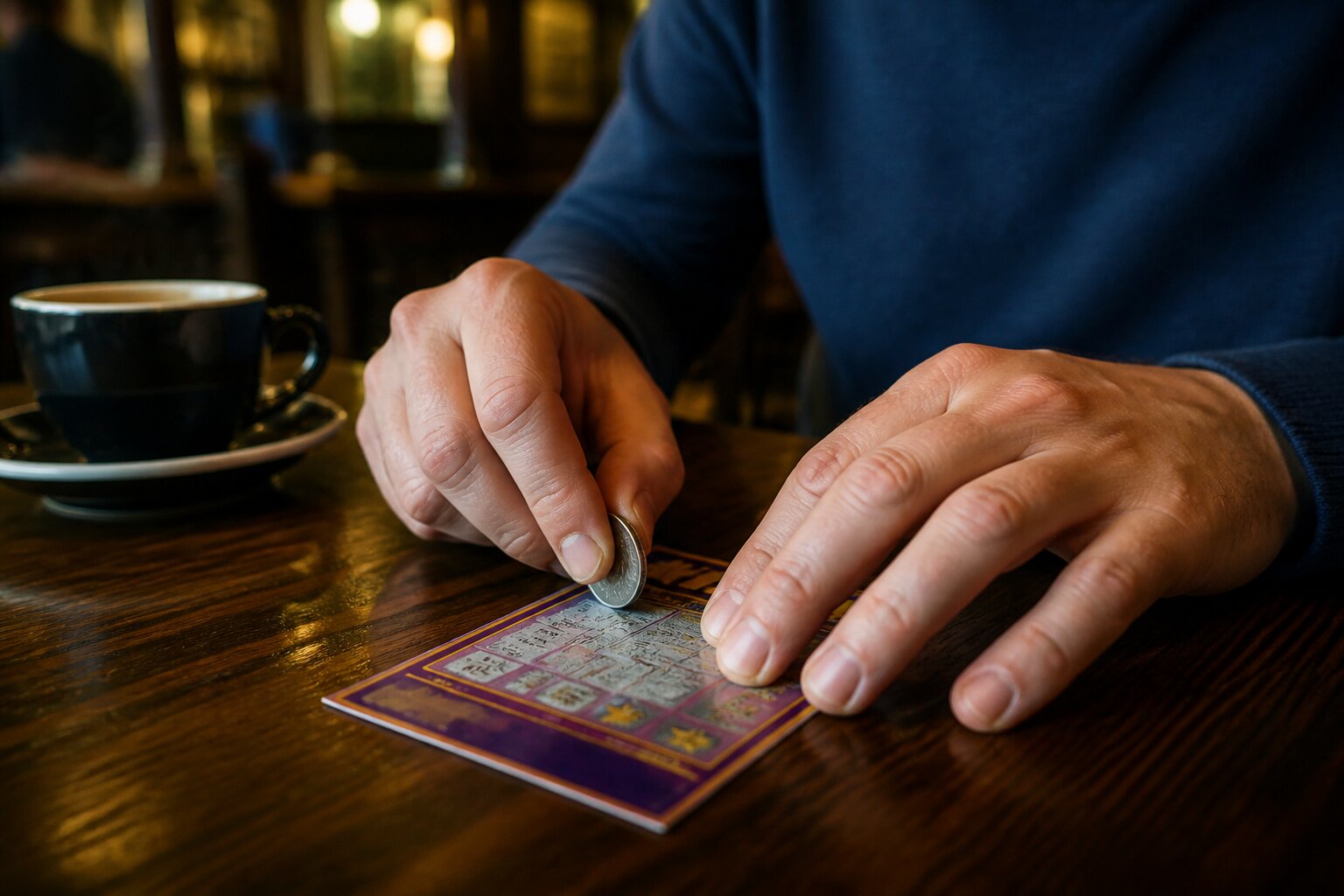
Scratch cards promise instant excitement and the chance to pocket a tidy sum in seconds. With bright designs and tempting cash prizes, many of us enjoy a flutter now and then. But what are the real chances of landing a big payout, and how do odds and prizes actually work?
It’s easy to get swept up when huge jackpots are advertised, yet the numbers behind the game tell a different story. This guide breaks down how scratch cards are made, what the published odds mean, how winnings are paid, and what to check before you buy — so you can make more informed choices and keep the experience enjoyable.
Whether you play occasionally or more often, read on to understand what to expect from scratch cards and how to spot the differences between small wins and the rare, larger prizes.
What Are Scratch Cards & How Do They Work?
Scratch cards are straightforward gambling products sold in shops and online. You pay to reveal covered symbols or numbers; certain combinations win a prize printed on the card. Physical cards use a scratch-off coating; digital ones reveal symbols when you click or tap.
Each card is produced with a fixed set of prizes and quantities, so the overall odds are established before the cards are distributed. That means every card of a particular run carries the same statistical chance of winning as any other in that same run. For online games, the outcome of each play is determined by a random-number process so each flip of the card is independent of previous plays.
You must be at least 18 years old to buy or play scratch cards in the UK. This legal minimum helps keep games appropriately restricted.
What Are the Odds of Winning on Scratch Cards?
Manufacturers publish the odds for each scratch-card game; these figures indicate the chance of winning any prize, not necessarily the top prize. Commonly quoted odds such as “1 in 4” refer to the overall likelihood of receiving some return — which often includes very small prizes, like a full or partial refund of the ticket price.
The odds of hitting a major prize are far lower than the overall odds. Top prizes may be rare by design, with chances commonly running into the hundreds of thousands or millions to one, depending on the game. For online scratch cards you can usually view the paytable or information page before you play, which lists the odds for each prize tier and the total prize fund.
Knowing these published odds helps set realistic expectations and compare different games before you buy.
How Much Can You Actually Win From Scratch Cards?
Prize ranges vary with the type and price of the card. Lower-cost tickets often offer small returns — a few pounds that may cover the ticket cost — while mid-range prizes might be £10, £50 or a few hundred pounds. Higher-priced or special-edition cards can list top prizes in the tens or hundreds of thousands.
While sizeable jackpots are advertised, only a small proportion of cards carry those top prizes. Most players who win will receive modest amounts, and large wins are uncommon. When choosing a card, balance the advertised top prize against the published odds: higher top prizes usually mean much lower odds of winning them.
Bear in mind also how prizes are distributed across a print run. A game may have numerous small wins and very few large ones, so the typical outcome for most players will be a smaller prize if they win at all.
Scratch Card Winnings: Tax & Payouts Explained
In the UK, scratch card prizes are not subject to income tax, so winners receive the full advertised amount. Small prizes are usually payable immediately by retailers, while larger amounts may require a visit to a designated claims office or following the issuer’s specified claim process.
Online winnings are normally credited to your account on the platform where you played, after which you can withdraw funds subject to that operator’s verification and withdrawal procedures. For significant payouts, identification and proof of entitlement are standard; these checks help prevent fraud and comply with legal and regulatory obligations.
If you do win, check the game’s terms for claim timelines and required documentation so you can collect your prize without delays.
Do More Expensive Scratch Cards Offer Better Odds?
More expensive cards sometimes show improved odds of winning smaller prizes, and their top prizes tend to be larger. A higher-priced ticket can therefore change the mix of prize sizes and the probability of receiving any return.
However, a higher ticket price does not guarantee a win or superior return on investment. Each card remains an independent event, and even games with better odds still have outcomes skewed toward the issuer’s designed prize distribution. Examine the published odds for each prize tier rather than relying on price alone to judge expected value.
If you choose a pricier card, consider how it fits your entertainment budget rather than assuming it will pay out more often.
Are Scratch Cards Truly Random?
Scratch cards are designed so outcomes are not predictable. Physical cards are printed with a set number of winning and non-winning cards and are mixed before distribution, preventing predictable patterns at the point of sale.
Digital versions use tested random-number systems to determine each play’s result independently. Licensed operators are subject to oversight and independent testing to ensure fair play and that games behave as advertised. Audits and technical checks are part of maintaining compliance and protecting players.
Because results are not controllable, there are no guaranteed methods to improve your chances once a card has been issued or a digital play begins.
Common Myths About Scratch Card Wins
A number of ideas about scratch cards are widespread but incorrect. One is that a particular shop or batch becomes “due” for a win; in reality, distribution and printing mean there’s no reliable way to identify where winning cards are located. Another is that skillful selection improves outcomes — scratch cards don’t involve skill in the way some other games do, since the result is determined before you reveal the panel.
Buying many tickets increases the number of plays you have, but each ticket remains an independent opportunity with its own fixed odds. There are no hidden strategies that change statistical probability after production.
If you’re uncertain about a claim you’ve heard, check the game’s published odds and the issuer’s information rather than relying on anecdote.
Where to Buy Scratch Cards in the UK
Scratch cards are sold widely in shops and online. Buying from recognised sellers helps ensure the game you purchase is genuine and that any refunds or claims are handled correctly.
In person, legitimate retailers include:
- Newsagents
- Supermarkets
- Post offices
- Petrol stations that are authorised to sell such products
Online, use official platforms or licensed gaming sites. These operators must meet regulatory standards that protect players, including age checks, secure payments and clear information on terms and prizes.
When buying online, check for:
- A valid UK Gambling Commission licence number
- Clear age and identity verification processes
- Secure payment methods and HTTPS on the site
- Easily accessible terms, prize details and how to make a claim
Avoid unofficial or unregulated sources, which may not follow legal requirements or provide secure payout processes. If a seller cannot provide licence details, a receipt or a clear claims procedure, do not proceed.
Responsible Play: Keeping Scratch Card Fun
Scratch cards are best treated as a short-form form of entertainment rather than a source of income. Enjoyment comes from the game itself, so it helps to keep spending within a pre-set limit and to be mindful of how often you play.
Set boundaries that suit your finances and lifestyle, and use available tools to help stick to them. Many online operators provide deposit limits, activity summaries and cooling-off options to help manage play. If involvement starts to make you anxious, affects your mood, or you find yourself spending more than planned, those are signals to pause and reassess.
Support and confidential advice are available from specialist organisations, and practical measures such as self-exclusion or limit-setting can be effective ways to regain control. If you feel your play is becoming a problem, reaching out early makes it easier to address.
Play in ways that keep the experience enjoyable, stay within your means, and use the safeguards available when needed.
**The information provided in this blog is intended for educational purposes and should not be construed as betting advice or a guarantee of success. Always gamble responsibly.