
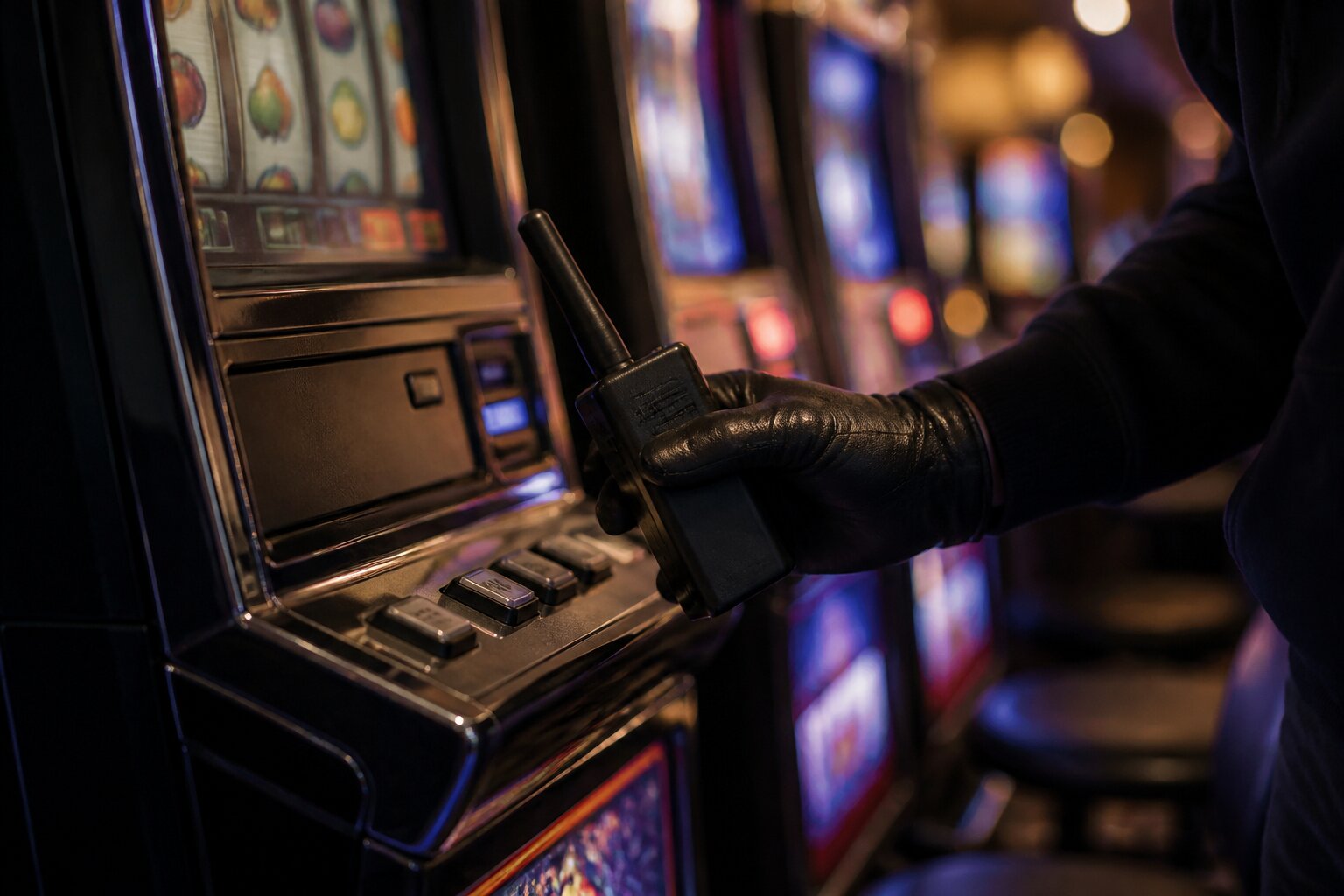
The idea of beating slot machines with clever gadgets or secret hacks has circulated for decades. Tales about slot machine jammers appear in backroom whispers, films and online forums, promising a shortcut to payouts and instant wins.
But how much of that is true? Are these devices simply urban legend, or could someone still trick a modern slot machine?
If you’ve ever wondered whether jammers are real, or what actually protects today’s games, this article takes a clear look at the technology, the myths and the legal risks so you can separate fact from fiction.
How Do Slot Machines Work in Modern Casinos?
Modern slot machines are digital systems controlled by software rather than mechanical parts. The core component is the Random Number Generator, or RNG. The RNG continuously cycles through number combinations and determines the outcome at the exact moment the player initiates a spin. That design makes each result independent of previous spins and unaffected by external interference.
Regulated venues and operators must have their games tested by independent laboratories to confirm that the RNG behaves correctly. Testing verifies that the software follows the stated rules, produces statistically fair distributions of outcomes and complies with technical standards. These checks are repeated on a schedule and whenever software is updated.
Because outcomes are produced by certified software running on secured hardware, there is no simple external method to influence the result. Modern slots are built to ensure integrity through a combination of cryptographic protections, physical safeguards and ongoing audits.
The Role of Technology in Slot Machine Protection
Technology does more than determine outcomes; it actively defends machines against tampering. Secure hardware encloses critical components and uses tamper-evident seals and locks. Firmware and game code are signed and verified so unauthorised modifications trigger alerts.
On the software side, encryption protects communications and sensitive files. Casinos deploy monitoring systems that track machine behaviour for anomalies, such as unexpected resets or unusual communication patterns. Where a machine deviates from its expected parameters, administrators receive logs and alerts that guide a prompt investigation.
These defensive layers are continually reviewed and updated to counter new attack methods. Combining physical, electronic and operational protections makes it highly unlikely that a device placed near or on a machine could change game behaviour without detection.
Common Myths About Slot Machine Hacking
Stories about magnets, wires or pocket-sized “jammers” often rely on outdated ideas about older mechanical machines. Those tactics are not effective against digital systems secured by signed code and encrypted files. Many supposed techniques presume direct access to internal components, which is prevented by locks, seals and surveillance.
Another persistent belief is that pattern-seeking or timing tricks can predict a machine’s behaviour. Because each spin is determined by the RNG at the moment the spin is initiated, past results provide no reliable information about future outcomes. In practice, that means methods based on perceived patterns do not change the statistical behaviour of a game.
Finally, claims that simple gadgets can systematically alter payouts ignore the realities of testing and oversight. Independent testing, continuous monitoring and regulatory scrutiny close the window for covert manipulation. When a machine is suspected of abnormal operation, it is taken out of service and thoroughly examined.
What Security Measures Do Casinos Use Against Jammers?
Casinos cover security on several fronts: physical, electronic and procedural. Surveillance systems keep machines in plain view, while staff are trained to spot signs of tampering. Physical locks and tamper-evident measures protect internal circuitry and cabinets. If a machine is opened, that action is logged and often captured on camera.
Behind the scenes, software systems collect diagnostic and audit logs that record event histories, firmware versions and performance metrics. Any inconsistency triggers follow-up checks. Regular audits by independent testing bodies verify that the installed software matches approved versions and that payout behaviour aligns with the certified model.
These combined steps create a layered defence. Because evidence from multiple sources—physical inspection, logs and independent testing—would be needed to show interference, it becomes extremely difficult for a single clandestine device to alter outcomes without being detected.
Physical Security Precautions
Physical measures start with controlled access to machines. Cabinets are secured and opened only by authorised technicians. CCTV coverage is arranged to capture both the gaming floor and the front and sides of machines, making covert access hard to conceal. Maintenance and inspection routines also provide additional oversight, with records kept of any authorised servicing.
If an irregularity is suspected, a machine is typically removed from play so technicians and investigators can examine it in a controlled environment. That process preserves evidence and reduces the chance of further tampering.
Software and Electronic Safeguards
Machines run signed firmware and game code, which the system verifies on start-up. Cryptographic checks prevent unauthorised binaries from running. Telemetry and event logs capture machine status and transactions, enabling operators to spot deviations from typical patterns. Regular software updates and security patches are applied under controlled procedures to maintain integrity.
Independent testing organisations periodically re-certify games and systems. Their reports help ensure that encrypted communications, RNG implementations and payout tables conform to regulatory standards.
Are There Legal Consequences for Using Jammers?
Attempting to use or possess devices intended to interfere with gaming systems is a criminal matter. Operators and regulators treat tampering seriously, and enforcement can include removal from premises, bans, criminal charges and financial penalties. When suspicious behaviour arises, operators preserve evidence and cooperate with investigators to support a prosecution if required.
Beyond immediate enforcement, venues have a duty to report certain incidents to regulatory bodies. That reporting helps maintain overall compliance across the industry and deters attempts at manipulation. In short, the legal and operational consequences of tampering are significant, and the safeguards in place make both success and anonymity unlikely.
How Can Players Recognise Safe and Secure Slot Machines?
Trustworthy machines are those operated within regulated venues that publish clear information about testing and oversight. On-site, visible maintenance records, properly sealed cabinets and attentive staff are indicators of a monitored environment. Online, secure connections and published testing certificates show that operators follow standard procedures.
If players ever notice signs of physical tampering, inconsistent behaviour on a machine or missing documentation, raising the concern with staff brings the situation into the formal inspection process. Operators typically investigate reports promptly, taking machines offline and conducting technical checks when required.
Keeping play within regulated environments and checking for basic security cues helps ensure the games behave as expected and that any anomalies are handled through established procedures.
Conclusion: Understanding the Reality Behind Slot Security
Stories about slot machine jammers persist because they are compelling tales, but modern gaming systems are designed specifically to prevent that kind of interference. The combination of cryptographic protections, tamper-resistant hardware, continuous monitoring and independent testing creates a robust defence that leaves little opportunity for simple gadgets to alter outcomes undetected.
Trying to interfere with a machine carries serious legal and practical risks and is unlikely to succeed against properly secured systems. Choosing regulated venues and staying alert to obvious signs of tampering are the best ways to make sure your gaming experience is conducted in a secure, professionally managed environment.
If you have concerns during a visit, speak to venue staff so they can investigate; they are responsible for keeping machines safe and for addressing any issues that arise.
**The information provided in this blog is intended for educational purposes and should not be construed as betting advice or a guarantee of success. Always gamble responsibly.