
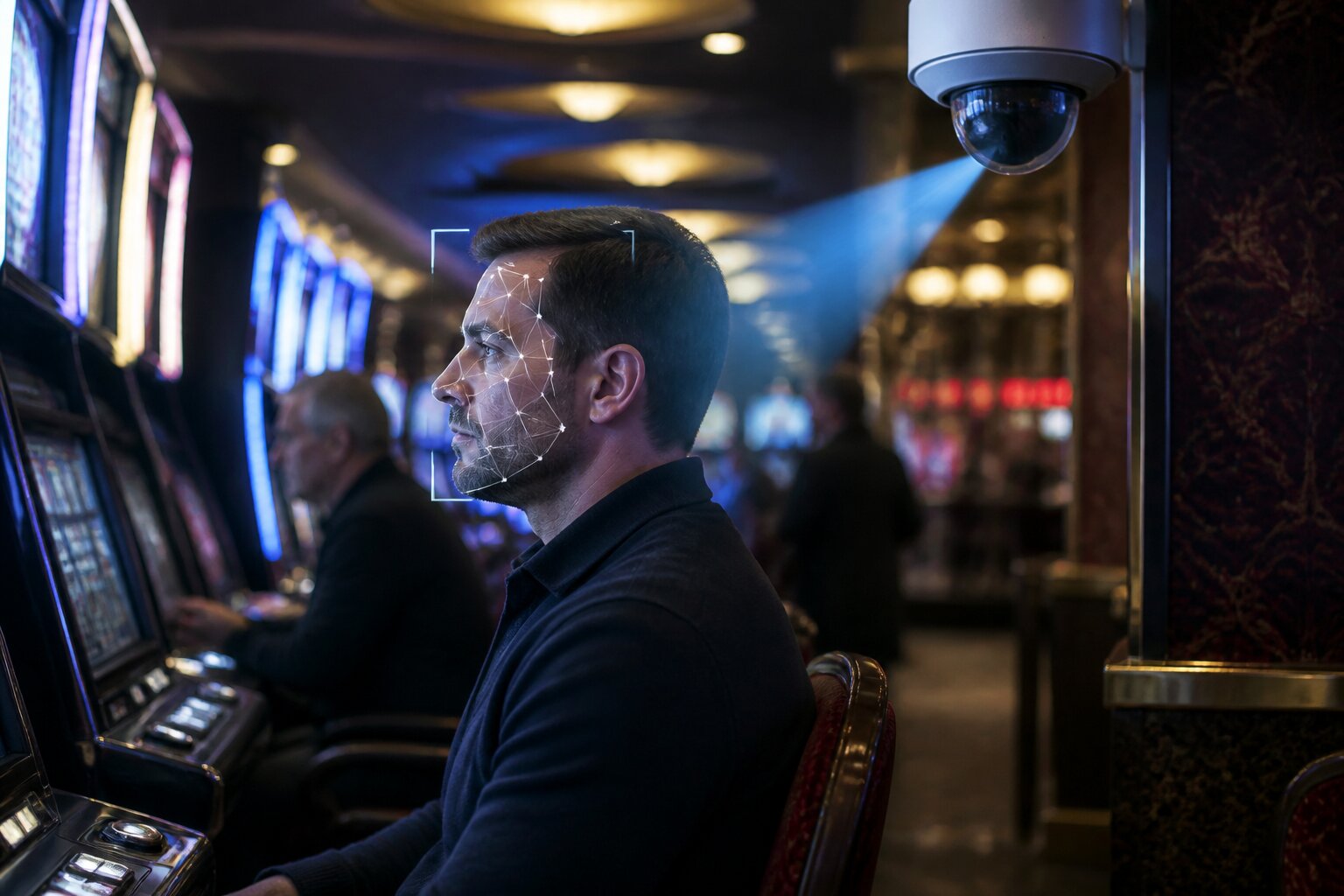
Ever wondered just how far casino security goes? Slot machines are packed with clever tech these days, but do they actually watch your every move—or even recognise your face?
There’s plenty of curiosity around surveillance, personal data and the systems casinos use to keep games fair. This article separates fact from fiction so you know what happens behind the scenes when you take a seat at the machines.
Read on to understand how cameras, monitoring systems and, in some cases, facial recognition work together to protect both players and venues.
What Technology Do Casinos Use For Security?
Casinos rely on a mix of cameras, networked machines and trained staff to maintain a secure environment. Closed‑circuit television covers most public areas so security teams can spot unusual behaviour or incidents quickly. Modern CCTV is paired with digital recording, which means footage can be reviewed as evidence if needed.
Slot machines are connected to central management systems that log activity and alert technicians to faults, tampering or anomalous patterns. These systems also help reconcile accounting and ensure machines behave according to technical standards.
Human oversight remains central: dedicated security rooms monitor feeds and combine what the cameras show with reports from the floor. Together, equipment and staff form layers of protection aimed at preventing theft, fraud and other harms while keeping play fair for everyone.
How Does Facial Recognition Work In Casinos?
Facial recognition, where used, involves software analysing camera images and comparing them with a database to identify individuals. The process is automated and operates in real time so staff can be notified quickly if someone on a watchlist is detected.
Any deployment of this technology in the UK must comply with data protection law and the Gambling Commission’s requirements. That means images are handled under strict rules, access is limited, and there must be clear, lawful reasons for processing biometric data.
The stated purpose for facial recognition in venues is security‑related: identifying banned patrons, suspected fraudsters or people already known to pose a risk. It is not intended to profile how people play or to personalise marketing while they are on the floor.
Are Slot Machines Connected To Casino Surveillance?
Yes. Individual machines communicate with back‑end systems that log coin or cash input, payouts, error messages and maintenance needs. This telemetry helps operators detect tampering, technical faults or irregular patterns that might indicate misconduct.
Cameras covering rows of machines provide visual confirmation when an issue is flagged. For example, if a machine registers a sequence of unusual events, staff can review nearby footage to see whether there was interference, an error or another legitimate cause.
These links between machines and surveillance are about protecting the integrity of games and the safety of the premises, not about altering game behaviour or monitoring players’ choices.
To move the topic along, the next section looks at the practical benefits that facial recognition can bring when it is used appropriately.
What Are The Benefits Of Facial Recognition In Casinos?
When implemented with proper safeguards, facial recognition can speed up identification of individuals who are barred, have outstanding issues with the venue, or are linked to past incidents. This helps security teams respond more quickly and reduce the chance of someone causing harm or disruption.
It can also assist in preventing identity fraud by matching people at entry points with images on file, and it can support exclusion schemes where someone has opted not to enter gambling premises. In operational terms, the technology can reduce the time staff spend on manual checks, allowing them to focus on de‑escalation and customer service.
All benefits depend on careful governance: data minimisation, access controls, retention limits and transparent policies are essential to ensure the system is used only for legitimate, proportionate purposes.
Is My Privacy At Risk When Playing Slot Machines?
Concerns about privacy are understandable. In the UK, surveillance and any facial recognition must be managed within the Data Protection Act and the UKGDPR, as well as Gambling Commission guidance. That legal framework restricts why images can be captured, how long they can be kept and who may view them.
Footage and images are typically only processed for safety, security or regulatory reasons. Marketing use of identifiable images without consent would be unlawful. Venues are expected to publish privacy notices explaining their surveillance practices and how individuals can raise questions or complaints.
If you want reassurance in person, staff can usually explain the venue’s approach to recording and data handling before you enter.
Common Myths About Casino Surveillance Systems
There are a few persistent misconceptions. One is the belief that surveillance can change the outcome of slot machines; in reality, game outcomes are determined by the machine’s internal systems and certified software, and surveillance does not interfere with those processes.
Another myth is that cameras and analytics exist solely to spy on customers for commercial gain. In practice, monitoring is governed by privacy law and regulatory oversight; any use of advanced analytics or recognition technologies must be justified and documented.
Finally, some people assume technology eliminates the need for staff. While automation can assist, human judgement is still needed to interpret evidence, make welfare decisions and handle incidents sensitively.
These clarifications should help set expectations for how monitoring fits into casino operations. Next, we’ll look at the specific legal safeguards that enforce those expectations.
How Do UK Casinos Comply With Privacy Laws?
Operators are required to follow the UK General Data Protection Regulation and the Data Protection Act, alongside the Gambling Commission’s licensing conditions. This combination sets out rules for transparency, lawful bases for processing data, retention periods and individual rights such as access and rectification.
Practically, this means venues must document why they use surveillance, limit access to footage, store recordings securely and delete them when no longer needed. Staff training is part of compliance, ensuring employees understand both security aims and privacy obligations.
Where sensitive biometric processing is proposed, additional legal standards apply and formal assessments are often needed to show the benefits outweigh risks and that less intrusive options were considered.
The Future Of Slot Machine Security In Casinos
Security systems will continue to evolve, with better analytics and detection tools that reduce false alarms and support faster, proportionate responses. Improvements in camera resolution and networked monitoring can help teams focus on genuine incidents while minimising unnecessary intrusions.
Developments are likely to be guided by stricter privacy expectations and clearer regulation, so new capabilities will need to demonstrate their necessity and safeguards. Technology may also assist in identifying people who need help, but any use that involves identifiable data will remain subject to tight controls.
As these systems advance, the emphasis is on balancing safety and privacy so that venues can protect their customers and staff without overstepping legal and ethical boundaries.
This wraps up the practical picture of how surveillance and facial recognition fit into casino security: a mix of cameras, connected machines and regulated policies designed to keep environments secure and fair, with legal protections in place to safeguard personal data.
**The information provided in this blog is intended for educational purposes and should not be construed as betting advice or a guarantee of success. Always gamble responsibly.