
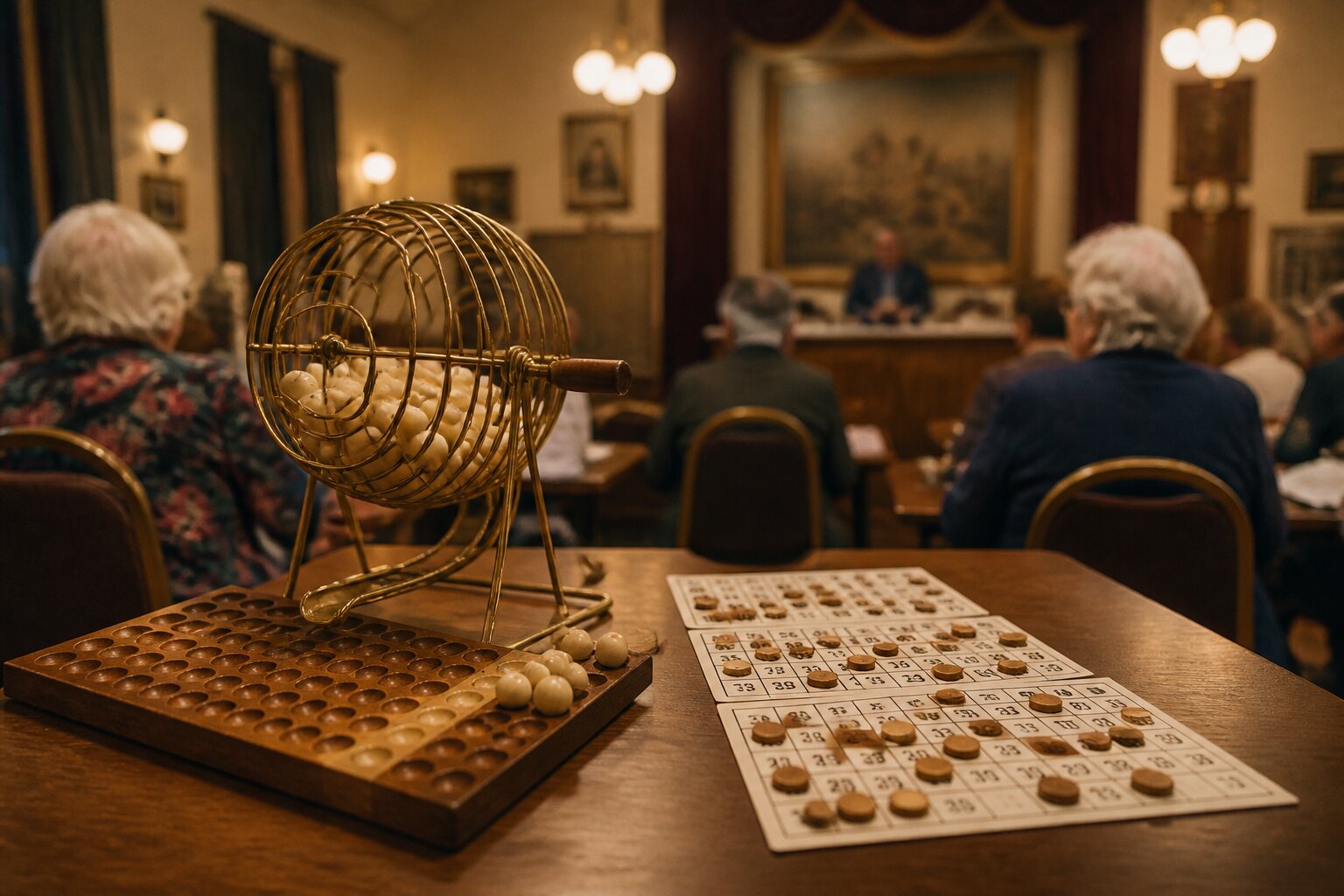
Bingo is a game enjoyed by millions, bringing people together for an evening out or a community fundraiser. But where did it begin, and who first put the pieces in place for the game we know today?
The story stretches back centuries and across several countries, with the mechanics of random number selection and number-marking appearing in different guises before settling into the patterns and formats familiar now.
Ready to follow bingo’s path from early lotteries to modern halls and online rooms? The next sections trace the game’s key developments and the figures who helped shape it.
What Were the Earliest Forms of Bingo?
The earliest version traceable to a formal game comes from 16th-century Italy, where Il Gioco del Lotto d’Italia operated as a public lottery. People purchased tickets printed with numbers while officials randomly drew wooden balls and announced the results. Ticket-holders marked numbers as they were called, aiming to complete specified rows or patterns to claim prizes. The basic dynamic — a caller, a sheet of numbers and the act of matching — was already in place.
In 18th-century France the game reappeared as Le Lotto and became popular among the aristocracy. Playing cards typically had three rows and nine columns, and chips or markers were used to cover numbers as they were called from a bag. It was largely a leisure pursuit for well-to-do households, but the structure remained recognisably similar to the Italian model.
Germany added a different dimension by adapting lotto into an educational tool. Children used cards printed with multiplication tables, vocabulary or historical dates, and the calling process turned learning into an engaging group activity. That educational twist showed how flexible the format could be — equally suited to chance-based prizes or structured teaching.
These early variants established the game’s enduring mechanics: numbered cards, a random draw and the marking of numbers to reach a winning configuration. Next, we’ll see how those mechanics travelled north and took root in the UK.
How Did Bingo Arrive in the UK?
Bingo arrived in Britain during the early 20th century, building on a long European tradition of lotteries and communal number games. Legal and social frameworks influenced how it developed: legislation in the 1930s clarified which small-stakes games were permissible, setting boundaries that would shape later practice.
After the Second World War, bingo’s popularity increased markedly. Redundant cinemas, dance halls and community buildings were commonly repurposed as venues where groups could gather for affordable entertainment. Organisers established clear procedures: appointed callers announced numbers, cards and prizes followed set patterns, and venue managers enforced rules to ensure transparent conduct.
This period also saw the emergence of commercial operators who standardised many aspects of play, such as the use of printed booklets and scheduled sessions. The result was a widely accessible, socially oriented pastime that fitted within local licensing systems and community expectations. The next section examines how technological and organisational changes transformed that early model into the larger-scale halls and formats people recognise today.
Bingo’s Transformation: From Parlour Game to Modern Favourite
Over the 20th century the game evolved from small, informal gatherings into professionally run venues and, eventually, digital formats. Paper cards gave way to printed ticket books so players could handle multiple games at once. Microphones and PA systems made it practical to run large sessions, and the layout of halls became geared toward both visibility and comfort for long sessions.
Technology introduced further change. Mechanical and electronic random number generators replaced older manual methods in some contexts, reducing the potential for human error and allowing venues to manage more frequent draws. The appearance of electronic bingo on consoles and, later, on computers and smartphones created new ways to play while preserving the core call-and-mark structure.
Socially, bingo remained a collective activity. The regular, scheduled nature of sessions turned many local halls into social hubs where friendships formed and local traditions developed. At the same time, regulatory oversight kept the game within defined rules for stakes, prize limits and transparency. With that groundwork in place, bingo’s use as a fundraising tool emerged as a natural extension of its community role.
The Role of Charity and Fundraising
Charity bingo nights became commonplace because the format is well suited to raising funds: it draws a broad cross-section of people, is straightforward to organise, and can be run repeatedly with modest overheads. Community groups, churches and veterans’ organisations often used bingo to support local projects and national causes. Those events typically kept clear records of takings and prizes and were subject to local licensing where required, helping to maintain public trust.
Fundraising bingo sometimes featured modestly tailored rules or themed sessions to attract different audiences, but the essential elements remained the same: an organised caller, numbered cards and transparent prize awards. This practical adaptability is one reason the game continues to serve both social and charitable purposes.
Social and Cultural Impact
Bingo became woven into local routines and social calendars. Weekly sessions offered a predictable place for people to meet, and the game’s format lent itself to themed nights, special jackpots and community celebrations. In many towns and suburbs, bingo nights were part of family traditions and local fundraising culture.
Across society, the game influenced language, leisure patterns and the way communities organised small-scale events. That cultural presence helped sustain interest through changing entertainment trends and technological shifts, setting the stage for wider commercial expansion and international dissemination.
Who Popularised Bingo Around the World?
Several individuals and movements helped the game spread internationally by adapting it to local tastes and promoting it in new venues. In the United States during the 1920s, an entrepreneur encountered a carnival variant and introduced rule changes and a new name, “Bingo,” that resonated with players and simplified play. The game rapidly found a place at church events and charity functions, where its straightforward structure made it easy to run and to participate in.
Elsewhere, local names and minor rule variations emerged — in Australia the game known as “Housie” followed similar patterns, while other countries adjusted card sizes, prize structures and session lengths to suit local customs. Commercial operators and clubs worked with venues to expand availability, and later technological advances allowed the move into online and app-based platforms.
These combined developments underpin bingo’s global reach: simple mechanics that are easily localised, coupled with formats that suit both informal fundraising and professional entertainment. The following section looks at how those choices and regulations shaped the rules players use today.
Key Influences on Today’s Game Rules
Modern bingo reflects a mixture of tradition, regional preference and legal requirement. One clear example is the 90-ball format common in Britain, which uses tickets of three rows and nine columns and awards prizes for one line, two lines and a full house; this contrasts with the 75-ball format prevalent in North America, where a five-by-five grid and different prize patterns are normal. These differences demonstrate how a shared concept can produce diverse, locally preferred forms.
Legislation and licensing have also steered the game’s contours. Mid-century laws permitted commercial clubs to operate under specified conditions, and later frameworks strengthened requirements for fairness, transparency and player protection. In practical terms this meant certified random number selection where relevant, published terms and clearer accounting of stakes and payouts.
The rise of online play brought additional compliance measures: platforms are expected to use approved random number software, present clear game rules, and provide help and limits for players. So while the surface experience — a caller, a card and the marking of numbers — remains familiar, the systems behind it are now shaped by technical standards and regulatory oversight to maintain fairness and consistency.
The Bottom Line: Bingo’s Fascinating Journey
Bingo has moved from Italian lottery stalls and aristocratic parlours to community halls and internet rooms, adapting at every stage while keeping the central idea intact. Its evolution reflects practical innovations, local tastes and legal frameworks that together shaped the formats people play today.
Across its history the game has served social and charitable functions as well as commercial ones, and its simple structure makes it easy to personalise for different audiences. In the UK context, modern practice is governed by licensing and standards that require operators to be open about rules and to protect players; the game is strictly for those aged 18 and over.
Taken as a whole, the story of bingo shows how a basic pairing of numbers and a draw can grow into a long-standing social institution that continues to bring people together in regulated, transparent settings.
**The information provided in this blog is intended for educational purposes and should not be construed as betting advice or a guarantee of success. Always gamble responsibly.