
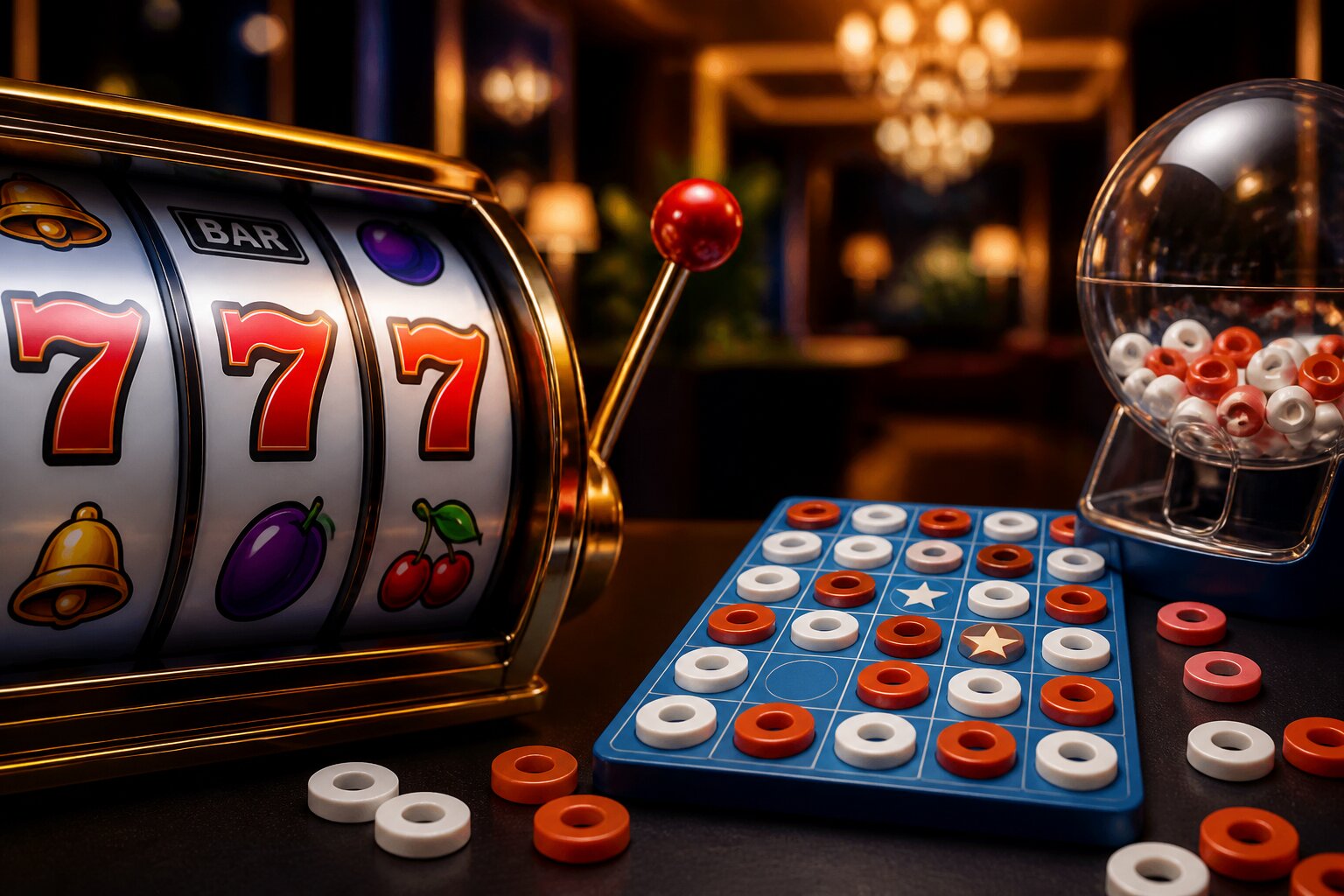
If you enjoy fast, screen-based games that deliver quick rounds, you may be deciding between two popular options: online slots and Slingo. Both deliver entertainment in short sessions, but they do so in very different ways.
This article walks through how each game works, what makes them engaging, and which might suit different tastes. Read on to discover the strengths of both and decide which style of play feels more fun for you.
What Are Slots & Slingo? A Quick Overview
Slots are digital games built around spinning reels, symbols and paytables. Players pick a bet and spin; winning combinations pay according to the game’s rules. Modern slots offer a wide range of themes and extras such as wild symbols, scatters and free spins. Outcomes are determined by a random number generator so results are fair and independent.
Slingo combines elements of slots and bingo. The usual layout places a 5×5 bingo grid above one or more spinning reels. Each spin reveals numbers or symbols that you match to the grid; completing lines — known as Slingos — earns points or triggers prizes. Slingo versions often add jokers, multipliers or bonus rounds linked to how much of the grid you mark.
Both formats are structured for quick rounds and clear goals, setting up very different rhythms of play. Next we’ll look at how their mechanics create those rhythms.
Game Mechanics: How Do They Differ?
Slots follow a simple cycle: set a stake, spin the reels and collect any winnings shown by the paytable. Some slots pay across fixed paylines; others use “ways to win” systems that match symbols in any position. Bonus features change how a spin plays out, for example by awarding free spins or altering symbol behaviour, but the core action remains a single spin-and-see outcome.
Slingo layers a grid-based objective on top of spins. Each spin can mark several numbers on the card, and strategic elements appear in how and when special symbols are used. Bonuses are often tied to progress on the grid rather than just the reels, so the prize structure rewards forming lines and unlocking extra play options.
Feature design also differs. Slot bonuses tend to centre on extending play for the base spin or delivering stacked wins, while Slingo’s extras often create choices that affect the next spin or the remainder of the card. Understanding these differences helps you pick a style that matches whether you prefer straight-ahead spins or a more involved card-based challenge.
Which Offers More Player Interaction?
Slots generally require few decisions once a spin starts; the main choices are stake size and, on some games, how many paylines are active. That makes slots ideal when you want quick, uninterrupted rounds and minimal on-screen tasks.
Slingo typically demands more engagement during a round. Players can choose when to deploy jokers or use power-ups and sometimes decide whether to buy extra spins. Those options mean each round has small strategic moments rather than a single passive outcome, which can be appealing if you like staying involved and influencing how the game unfolds.
Both styles can be satisfying: the low-interaction flow of slots versus the decision-led play of Slingo. If you enjoy deciding mid-round, Slingo will likely hold your attention longer; if you prefer a steady stream of spins, slots are the simpler choice.
Social & Community Aspects Compared
Most slot titles are solo experiences, though some platforms add social features such as leaderboards or timed tournaments. These create moments of competition without changing the solo gameplay itself.
Slingo sometimes includes multiplayer elements and community features. Certain releases offer live scoreboards, head-to-head modes or in-game chat that let players compare progress in real time. That makes Slingo a good fit for people who enjoy a sense of shared play or friendly rivalry.
Where social features exist, they tend to add an extra layer of enjoyment rather than altering core mechanics. If you value connecting with other players, look for Slingo versions with multiplayer or community options. Otherwise, individual play on either format delivers a focused sitting.
Visual Appeal & Themes: What Sets Them Apart?
Slot developers often lean into cinematic presentation, tailoring visuals and audio to support a chosen theme. That can mean elaborate animations, licensed imagery or soundtrack cues that give each title a distinct identity. Design choices shape not only appearance but also how immersive a game feels.
Slingo keeps a consistent grid layout, so theme variations usually affect background art, icons and sound rather than game structure. Some Slingo titles borrow assets and aesthetics from popular slots or shows, making them feel familiar while keeping the matching-and-marking gameplay intact.
Both formats offer a wide palette of looks. If presentation matters more than mechanics, slots will present a broader range of artistic options; Slingo provides visual variety while preserving a recognisable, easy-to-follow layout.
Are Slots or Slingo More Accessible for Beginners?
Slots are easy to pick up because the basic action is the same across most titles: set a stake and spin. Information such as paytables and rules is usually available in-game, letting newcomers understand payouts quickly.
Slingo requires an initial learning step to get comfortable with the grid, special symbols and how bonus features tie into progress. However, interfaces are typically clear and guided, so new players can learn by playing short rounds.
Both offer gentle learning curves; slots favour immediate simplicity, while Slingo rewards a little time spent learning how choices affect the card. That difference helps determine which game feels more inviting the first few times you try it.
Payouts & Prize Potential: What Should You Expect?
Payouts in slots vary widely between titles. Some games include progressive jackpots where a top prize grows over time; others focus on frequent smaller wins. Paytables tell you what combinations pay and how bonus rounds adjust potential returns.
Slingo rewards depend on how many lines you complete and the multipliers or bonuses you unlock. Prize structures often scale with card progress, so completing multiple Slingos in one round yields higher returns. Bonus rounds can significantly increase total winnings when they’re triggered.
Both formats rely on random number generation to determine outcomes, and expected returns are encoded into each game’s rules. Checking the paytable or game information before playing gives a clear picture of prize potential for a particular title.
Common Myths About Both Games
There are several persistent myths around these games. One is that patterns or streaks can be read and used to predict outcomes. In fact, each spin or round is independent and governed by a random number generator, so past rounds do not make future results more or less likely.
Another misconception is that certain behaviours or systems will increase chances of winning. Rules and audits ensure that game mechanics and payouts are fixed as declared, so no technique can alter the statistical odds built into a game.
A final myth is that operators can change results on the fly. Licensed games are tested and audited, and results cannot be altered after a round begins. Knowing these facts helps set realistic expectations and keeps the focus on enjoyment rather than trying to control outcomes.
Which Game Type Is More Fun for You?
If you like straightforward, rapid rounds with a wide range of themes, slots offer immediate variety and easy play. If you enjoy marking a card, making tactical choices and following progress across a short session, Slingo delivers a more interactive experience.
Personal preference is the main deciding factor: pick the style that keeps you entertained and fits how much engagement you want during play. Whatever you choose, set clear limits on your play and use site tools to manage time and spend so the experience stays enjoyable.
Both slots and Slingo provide distinct types of fun; your best pick depends on whether you prefer the steady pace of reels or the layered interaction of a grid-based game.
**The information provided in this blog is intended for educational purposes and should not be construed as betting advice or a guarantee of success. Always gamble responsibly.