
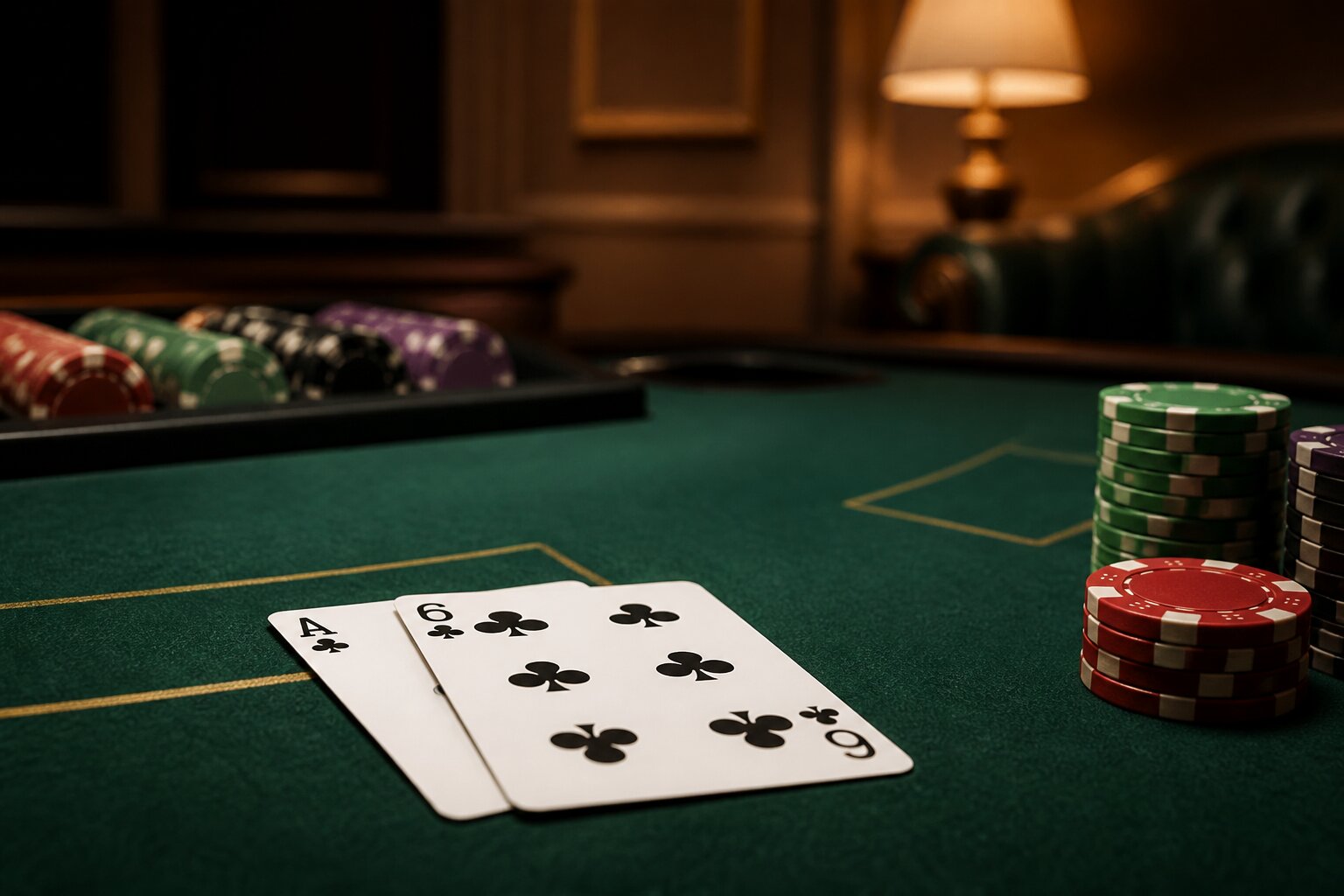
Blackjack is one of the most popular casino games, but some of its terms can be confusing even for regular players. One phrase that turns up often is “soft 17” — understanding it will make the game clearer and help you follow what happens at the table.
This article explains what a soft 17 is, how different tables treat it, and why those variations matter for play. Read on and you will always know what a dealer is doing when a soft 17 appears.
Soft 17 Definition: What Does It Mean in Blackjack?
A soft 17 is any hand that totals 17 and includes an Ace being counted as 11 rather than 1. The Ace provides flexibility: if another card would push the total over 21, the Ace can be revalued as 1 so the hand does not automatically bust.
Typical examples include an Ace with a 6, or a combination such as Ace, 2 and 4. As long as the Ace can be treated as 11 without exceeding 21, the hand is soft. By contrast, a hard 17 contains no Ace counted as 11; either there is no Ace at all or any Ace present is already valued at 1.
That flexibility is the defining feature of a soft hand, and it changes how the dealer or a player might proceed when a new card is drawn.
How Does a Soft 17 Affect the Rules of the Game?
Tables differ on how they treat a soft 17, and the most important variation is whether the dealer must hit or must stand on that total. Some games require the dealer to take another card when they have a soft 17, while others require the dealer to stand.
These instructions are part of the table rules and determine the sequence of play for that hand. They can be shown on the table layout or in the game rules online, so it is sensible to check them before joining a table. Knowing which rule applies will clarify what to expect when the dealer reveals a soft 17, and it also guides how the round unfolds.
Understanding this difference leads naturally into how and why casinos choose one rule over another.
Why Do Casinos Have Different Soft 17 Rules?
Casinos offer different soft 17 rules to create variety in their blackjack games and to set the mathematical edge of the house. Whether the dealer hits or stands on a soft 17 alters the probabilities in the game, so operators use the rule to offer tables that suit a range of player preferences and risk profiles.
Those choices are fixed for each table and contribute to the game’s character. Players who prefer slightly different tactical demands can select tables accordingly, since the rule affects dealer behaviour in a straightforward way. With the rule known before play starts, rounds proceed predictably and transparently.
Next, it helps to compare a soft 17 directly with a hard 17 so the practical differences become clearer.
Comparing Soft 17 and Hard 17 Hands
Both a soft 17 and a hard 17 total seventeen points, but their composition and practical implications are different. A soft 17 contains an Ace counted as 11, giving a margin for adjustment; a hard 17 offers no such margin and is fixed in value.
A soft 17 might be Ace and 6, or Ace, 2 and 4. If a further card is drawn that would otherwise bust the hand, the Ace can be revalued as 1 and play continues. A hard 17, such as 10 and 7, or a hand that includes an Ace already counted as 1, will go over 21 if another high card is taken.
Players sometimes treat soft hands as if they were hard and miss the strategic nuance the Ace provides. Recognising the difference helps read the dealer’s likely path under the table’s rule, which in turn informs how a round plays out.
Key Differences Between Soft 17 and Hard 17
The main distinction is flexibility versus finality. A soft 17 allows the Ace to switch value and absorb an extra card without immediate busting. A hard 17 has no such buffer; its total is fixed and any further large card will typically end the hand.
Hard hands tend to be safer to stand on because their value cannot change, while soft hands invite different responses since the Ace can adapt. These contrasts affect how both players and dealers approach the next action.
Common Mistakes Players Make
A frequent error is failing to spot that an Ace can be 11 and treating a soft 17 as if it were hard. Another is not checking the table’s specific rule about whether the dealer hits or stands on soft 17, which can cause confusion about how a round will resolve. Awareness of both the hand type and the house rule helps avoid these slips.
With the difference clear, the next section explains precisely how the dealer’s behaviour is dictated by the soft 17 rule.
How Do Soft 17 Rules Influence the Dealer’s Actions?
Dealer behaviour on a soft 17 is not discretionary. The table’s rule determines whether the dealer must take another card or must stop at that total. Where the dealer is required to hit on soft 17 they will draw again even though the hand reads as seventeen; where they must stand, the hand is complete without further draws.
Because the rule is fixed and publicly displayed, all dealers follow it consistently. This removes variation in how a dealer might play identical hands and makes outcomes depend solely on the rule and the next cards dealt.
Understanding the dealer’s fixed responses clarifies what follows when they reach a soft 17 and helps anticipate the likely course of the hand.
What Happens If the Dealer Hits or Stands on Soft 17?
If the dealer hits on a soft 17 they will take another card. The Ace’s flexibility means that a draw that would otherwise bust a hard hand can instead be absorbed by revaluing the Ace to 1, so play continues without an automatic bust. This can change the distribution of final dealer totals and therefore the comparisons with players’ hands.
If the dealer stands on a soft 17, the hand remains at seventeen and no further cards are drawn. That finality can shorten the dealer’s decision-making and occasionally leave players with opportunities to beat the dealer by reaching higher totals without busting.
Knowing which behaviour applies explains why some tables feel more aggressive while others are more settled, and it matters when choosing where to play.
Myths and Misconceptions About Soft 17
Misunderstandings about soft 17 often centre on overestimating its strength or expecting it to guarantee certain outcomes. A soft 17 is neither inherently better nor worse than a hard 17; it is simply a seventeen that includes an Ace which can change value. Knowing this helps to avoid thinking of soft 17 as a special kind of hand that will always behave in a particular way.
Another common misconception is that a soft 17 gives the player an advantage simply because the Ace provides flexibility. While that flexibility can affect the best strategic decision, it does not guarantee a win and does not change the underlying odds in any decisive way. The effect is subtle and depends on the specific play and the dealer’s upcard.
Some players also imagine that dealers act on personal judgement when holding a soft 17. In reality, dealers follow fixed house rules, so every dealer at the same table acts identically for that hand. Whether the dealer hits or stands on a soft 17 is set by the casino rules and displayed at the table, not chosen on the spot by the dealer.
Appreciating these facts keeps expectations realistic and helps players respond appropriately during a round. It is sensible to check the table rules before play because whether the dealer hits or stands on a soft 17 can slightly affect basic strategy and the house edge. Clearing up these myths leads naturally into the practical skill of recognising a soft 17 quickly at the table.
How to Quickly Recognise a Soft 17 at the Table
Spotting a soft 17 comes down to two things: seeing an Ace that can count as 11, and checking that the remaining cards add up to six. Common patterns include Ace and 6, or Ace followed by smaller cards that together total six. That combination makes a soft 17 because the Ace is still usable as 11.
Tables also display whether the dealer will hit or stand on soft 17. Taking a moment to note this before play begins makes it straightforward to follow the dealer’s next move and reduces surprises during the round.
Recognising the hand and knowing the rule in place will help you follow the action and understand the likely flow of play as the dealer completes their sequence.
**The information provided in this blog is intended for educational purposes and should not be construed as betting advice or a guarantee of success. Always gamble responsibly.