
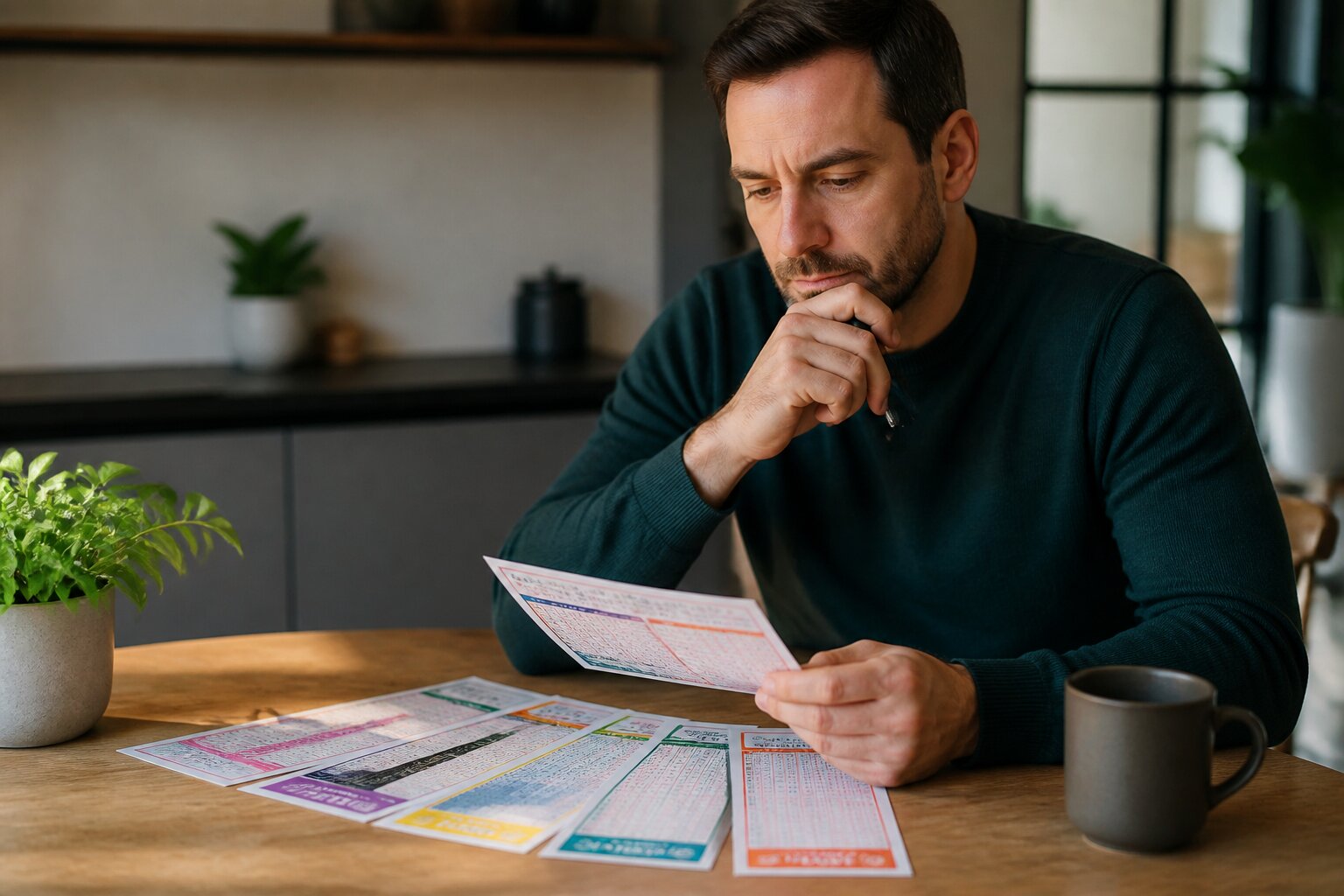
Ever wondered if you’re picking the right lottery when buying your weekly ticket? With so many options—from the National Lottery to EuroMillions and a range of smaller draws—it can be hard to know which one actually gives you the best chance of winning.
If you’re aiming for a significant prize, understanding the odds helps cut through the noise. This article explains how those odds work, compares the main UK games, and highlights the practical factors to consider so you can make a clearer choice.
Read on to see which lottery offers the most favourable odds for different outcomes, and why the “best” choice depends on what you want from playing.
How Do Lottery Odds Work?
Lottery odds describe the probability of a particular outcome based on how many possible number combinations exist and how many of those combinations win a given prize. For instance, when you must pick six numbers from a pool of 59, there are millions of possible combinations; the odds summarise the chance that any single ticket matches the exact winning combination.
Jackpot odds are for matching every required number and are typically the longest because they demand an exact match across many numbers. Odds do not change when more people buy tickets; each ticket retains the same probability. Buying multiple tickets only increases the number of entries held, not the odds attached to any single ticket.
Understanding this will help when comparing different games and their prize tiers. Next, we’ll look at how those calculations translate into real-world odds in the most-played UK draws.
Most Popular UK Lotteries Compared
The main UK draws differ in structure, which affects both the odds and the types of prizes on offer.
Lotto requires picking six numbers from 59. The jackpot odds are roughly 1 in 45 million, while smaller prize tiers reduce the difficulty and improve your chance of winning something.
EuroMillions asks for five numbers from 50 plus two Lucky Stars from 12. Its jackpot odds are much longer, around 1 in 140 million, but the top prizes can grow substantially higher than in other UK games.
Thunderball uses five numbers from 39 plus a Thunderball from 14. Its top prize is a fixed £500,000 and the odds of that top prize are about 1 in 8 million, which is considerably shorter than the larger national draws.
Set For Life features five numbers from 47 and one Life Ball from 10, with the top prize paying £10,000 per month for 30 years. The odds for that prize sit at around 1 in 15 million.
Each game mixes ticket cost, draw frequency and prize structure differently, so the next section explains how jackpot odds compare with the overall chance of winning anything at all.
Understanding Jackpot Versus Overall Winning Odds
Jackpot odds focus solely on the probability of winning the top prize by matching every required number. Overall winning odds combine the probabilities for all prize tiers, so they are always shorter than the jackpot odds.
For example, Lotto’s jackpot might be about 1 in 45 million, whereas the odds of winning any prize in the same draw are about 1 in 9. Those overall odds arise because many prize tiers reward matching fewer numbers, which are far easier to achieve.
Because the different prize tiers matter to different players, it’s useful to think about whether the aim is a very large jackpot or more attainable smaller wins. With that in mind, the next section looks at which games offer the most favourable chances for top prizes and for winning any prize.
What Are The Easiest Lotteries to Win?
If “easiest” means the shortest odds for a top prize, Thunderball stands out: roughly 1 in 8 million for £500,000. Set For Life has more favourable top-prize odds than the very large draws, at about 1 in 15 million for its long-term payout.
When considering the chance of winning any prize, Thunderball again performs strongly, with overall odds close to 1 in 13. Lotto and Set For Life offer better overall odds than EuroMillions, which provides the largest potential jackpots but with much longer odds at the top tiers.
So, if higher frequency or a better chance of winning something matters more than the size of the top prize, games like Thunderball are worth a look. Having considered which games have the best numerical odds, it helps next to weigh the practical factors that should influence your choice.
Factors To Consider When Choosing a Lottery
Picking a game is rarely just about the headline odds. Several practical factors influence whether a particular lottery suits your preferences, time and budget, and thinking about these before you play can help keep your activity enjoyable and within sensible limits.
Prize Sizes Versus Odds of Winning
Large jackpots draw attention because of the headline sums, but they generally come with very long odds. That can mean long periods between wins for a single player, and the size of the top prize often reflects how unlikely it is to be won.
Smaller top prizes usually accompany shorter odds, so the trade-off is clear: bigger potential payouts are harder to win, while smaller prizes are more attainable. For many people, choosing between these options comes down to whether they prioritise the thrill of a life-changing prize or more frequent, modest returns.
Ticket Price and Frequency of Draws
Ticket cost and how often draws take place affect how much you spend over time. A cheaper ticket may still add up if draws happen every day, while a higher price for a less frequent draw could be easier to budget for.
More frequent draws provide more chances to enter but can increase total spend if played regularly, so it is worth deciding in advance how much you are willing to spend each week or month. Less frequent draws limit exposure and may fit better for someone who wants to play occasionally without spending much, or for those who prefer planning rather than impulse entries.
Thinking about these practicalities helps match a lottery’s profile to what you actually want from playing. After that, you might wonder whether regional or lesser-known lotteries are worth trying; the next part explores that.
Are Lesser-Known Lotteries Worth Trying?
Regional or charity draws can offer a different balance. Often they have fewer players and smaller top prizes, which can mean relatively better odds for certain tiers, though the headline payouts seldom match national jackpots.
A further point is purpose: some local lotteries direct a portion of proceeds to community projects or charities, which can be appealing for those who like their spending to have an additional benefit. However, the random nature of draws applies equally to smaller games, and prize sizes reflect the scope of each lottery’s player base.
If you prefer a different prize structure or want to support a cause, these lesser-known draws are a valid alternative to the major national games. Whether you favour big jackpots or steadier chances for smaller prizes, it helps next to clear up some common misunderstandings about how lotteries operate.
Common Myths About Lottery Odds and Winning
A common misconception is that certain numbers are more likely than others. In reality, every individual number has the same probability in a properly run draw and results are not influenced by previous outcomes.
Some believe increasing the number of tickets guarantees a win; while extra tickets do represent additional entries, they do not alter the probability that any single ticket will win. Likewise, systems or software cannot change the underlying probabilities; no method can predict or increase the inherent randomness of a draw.
Another myth is that a long run without a jackpot win makes a win more likely next time. Draws do not carry memory of past results, so probabilities remain constant regardless of recent history.
Clearing up these points should help set realistic expectations. With a sense of what’s possible and what isn’t, you can make choices that match your personal priorities and limits.
Is There Really a "Best" Lottery to Play?
There is no single “best” lottery that suits everyone. Which lottery might be best for one person depends on what they value most: the chance of a very large jackpot, higher overall chances of winning any prize, the price of a ticket, or how frequently draws take place. Some players prioritise the excitement of chasing very large sums despite much longer odds, while others prefer lotteries with more attainable prizes and shorter odds that deliver more frequent small wins.
Choosing between games is therefore a personal decision that balances those elements against how much someone is prepared to spend and how they want to spend it. Considerations such as whether you prefer regular, low-cost entries or occasional play for a life-changing prize will influence which game feels right. Also relevant are whether you play alone or as part of a syndicate, and how much time you want to spend checking results.
If keeping play enjoyable and affordable is important, matching draw frequency and ticket cost to your budget is essential. Setting limits on spending and treating any play as entertainment rather than investment helps keep it within comfortable bounds, and seeking independent advice or support is sensible if gambling stops being fun.
Conclusion: Choosing the Right Lottery for You
Deciding which lottery to play comes down to your priorities: whether you prefer the chance at a life-changing sum or more realistic odds of a smaller prize, and how ticket cost and draw frequency fit with your budget. Play with clear expectations and treat lotteries as entertainment rather than a way to gain income.
If gambling begins to feel like a problem, help and practical tools are available from organisations such as BeGambleAware and GamCare. Making thoughtful, informed choices ensures that playing remains enjoyable and never affects your financial wellbeing.
**The information provided in this blog is intended for educational purposes and should not be construed as betting advice or a guarantee of success. Always gamble responsibly.