
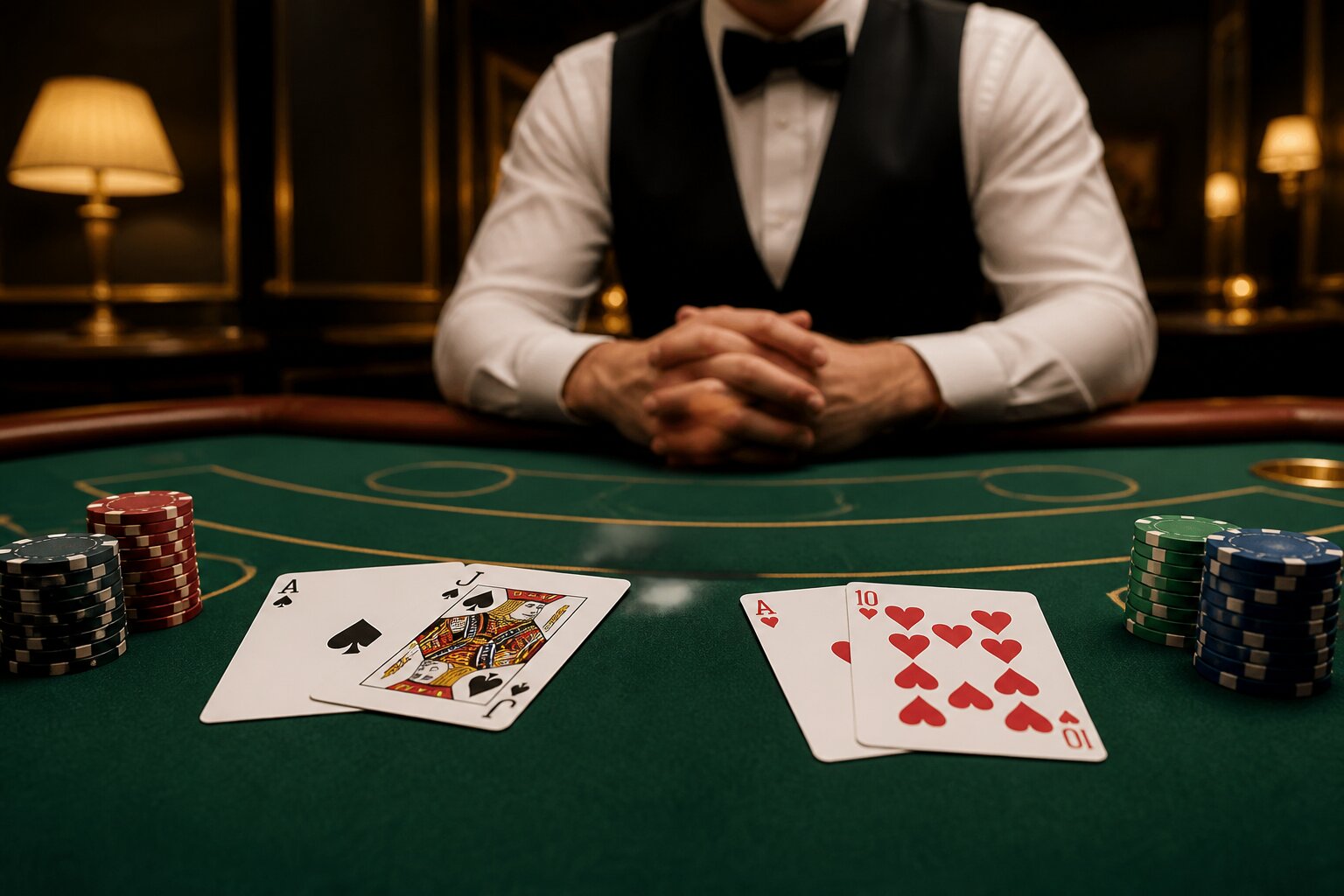
If you've ever stepped into a casino or played cards with friends, you've probably heard the terms "Blackjack" and "21" used interchangeably. But are they actually the same game, or do the differences matter when you sit down to play?
Both revolve around the number 21, yet the way you get there, the choices you can make and the setting you play in can change the experience completely. This guide explains the key distinctions in plain English so you can feel confident whether you’re at a table or around a kitchen counter.
Curious to know how the games compare and which one might suit you? Read on — the next sections break everything down clearly and without jargon.
What Is the Game of 21?
The game of 21 is a straightforward card game with roots that go back centuries in Europe. At its core the aim is simple: form a hand with a total as close to 21 as possible without exceeding it. Numbered cards carry their face value, face cards count as 10, and aces can be worth either 1 or 11, depending on which helps the hand.
Because 21 is often played socially, the rules are flexible. Sometimes there’s no fixed dealer; players take turns drawing cards, and betting—if any—tends to be informal or absent altogether. This relaxed format makes 21 a common choice for home games where the focus is on easy play rather than strict procedure.
When stakes are involved or the game moves into a licensed environment, the rules tend to be tightened up and more structured choices appear. Later sections explain how that structure differs in Blackjack, which is useful to know if you move from a casual game to a casino setting.
Where Did Blackjack Originate?
Blackjack developed from an earlier French game known as "Vingt-et-Un" (twenty-one). That game spread across Europe and eventually reached North America, where it began to evolve into the version casinos now offer.
One early American adaptation rewarded a hand containing an ace and a black jack with a bonus; the name "Blackjack" stuck even after the bonus disappeared in most modern rulesets. Over the centuries casinos and regions introduced further variations, shaping the set of rules commonly used today.
Knowing this history helps explain why Blackjack is more formalised: it evolved alongside commercial gambling, which required consistent rules for betting, payouts and dealer behaviour.
Blackjack vs 21: What Are the Main Differences?
Both games share the same numerical goal, but they tend to differ in structure and available options. Blackjack is typically a casino game where you play against a dealer and several procedural rules determine how play unfolds. These rules include how bets are placed, how much the dealer must draw, and which side options—such as splitting pairs or doubling a bet—are available.
By contrast, 21 is usually less formal. Without a strict dealer role or standardised side options, its focus is simply on getting to 21 without going bust. That makes 21 easier to pick up for a casual game, while Blackjack requires learning a few standard conventions to make informed choices.
These structural differences influence strategy and the pace of play, so the best choice depends on whether you prefer a simple social game or a more regulated table experience.
Rules Comparison: How Are Blackjack and 21 Played?
The practical differences become clearer when you look at how each game runs at the table.
Blackjack
In Blackjack players compete directly against a dealer. Bets are placed up front and each player receives two cards; the dealer usually has one card face up and one face down. Players then choose whether to take another card ("hit") or keep their current total ("stand"). In many Blackjack games additional options appear, such as splitting a pair into two hands, doubling the original bet for one extra card, or taking insurance in specific situations when the dealer shows an ace. Dealers follow a fixed drawing rule—commonly hitting until they reach 17—so the dealer’s actions are predictable and part of the game’s strategy. Winning hands pay out according to the table’s fixed odds.
21
Because 21 is often played informally, the exact mechanics vary. Typical home versions might see players take turns drawing cards or compare totals at the end of a round, without a formal dealer role enforcing drawing rules. There are usually fewer side bets and special moves, so the emphasis is on the basic choice of whether to draw another card or stop. That simplicity makes 21 an approachable option for quick social play, but it also means there’s less consistency between games.
Whether you choose Blackjack or 21, know the rules for the particular table you join; differences in procedure affect both risk and decision-making.
Is the Term “21” Still Used Today?
"Blackjack" is the name you’re most likely to encounter in casinos and on gaming sites. The simpler term "21" survives mainly in casual conversation and home games, where players may not use formal terminology.
This naming difference matters when you look for a game in a regulated environment: search for "Blackjack" if you want the structured, rule-driven version. If you’re with friends, calling it "21" is usually fine, but be aware the rules may not match those you’d find at a table.
If you’re moving from a home game to a public venue, take a moment to check the table’s rules so you know which options and payouts apply.
Common Myths About Blackjack and 21
Misconceptions circulate widely about both games. Clearing them up helps you make better choices at the table.
One common myth claims there’s a guaranteed way to win every time. In reality, no strategy ensures consistent wins; outcomes vary round to round and should be treated as uncertain. Another belief suggests card counting is easy and always permitted. In practice, counting is technically complex—especially with multiple decks and frequent shuffling—and venues often restrict or discourage it. Some players believe a sequence of losses makes future wins more likely; this is a mistaken view that can lead to riskier behaviour rather than sound decisions. Finally, it’s worth repeating that the rules for Blackjack and 21 are not universally identical; the former tends to be more formal, while the latter is more flexible.
Understanding these points helps set realistic expectations and keeps focus on practical decision-making rather than myths.
Which Game Is More Popular in the UK?
Blackjack is the dominant table game in UK casinos and on most gaming sites. Its appeal comes from a combination of features that suit both new and experienced players:
- consistent, straightforward rules
- clear betting options
- a dealer-versus-player format that works well at live tables and in digital formats
These qualities help blackjack translate easily between in-person casino floors, live-dealer streams and automated online tables, so it is the version you are most likely to encounter and learn to navigate in regulated venues.
The simpler home variant, often called 21, remains common in private settings and social gatherings. It tends to be played informally and with more flexible house rules, which is why it rarely appears as a separate product in commercial casinos or on licensed sites.
If you prefer the structure and consumer protections of a licensed operator, blackjack is the safer and more widely available option. Playing 21 at home can still be a pleasant social alternative when you want a relaxed, informal game.
How to Choose Between Blackjack and 21
Choosing comes down to the kind of experience you want. Blackjack suits players who prefer a structured table, clear betting mechanics and the interaction of playing against a dealer. The game offers more tactical choices and a steady format that rewards learning how the rules affect odds and payouts.
If the aim is a simple, social card game for friends or family, 21 is often the better fit because its flexible rules make it easy to adapt to the group’s preferences. Consider how much structure you want, whether you enjoy side options like splitting or doubling, and whether you’re playing for social reasons or in a more formal environment.
Keep in mind the legal age and local rules wherever you play, and choose the setting that feels right for you.
Summary: Understanding the Key Distinctions
Blackjack and 21 share the same objective of reaching 21 without going over, and they use similar card values. The crucial differences lie in structure: Blackjack is a formal, dealer-based game with standardised options and payouts, while 21 is a looser, social variation that often lacks those features. Which one you prefer depends on whether you like a regulated table experience or a flexible home game.
If you plan to play in public venues, check the table rules before you sit down so you know what options are available and how hands are settled. Play within your means, respect local regulations and be clear about your limits before you start. That way you can enjoy the game you choose with confidence and without surprises.
**The information provided in this blog is intended for educational purposes and should not be construed as betting advice or a guarantee of success. Always gamble responsibly.