
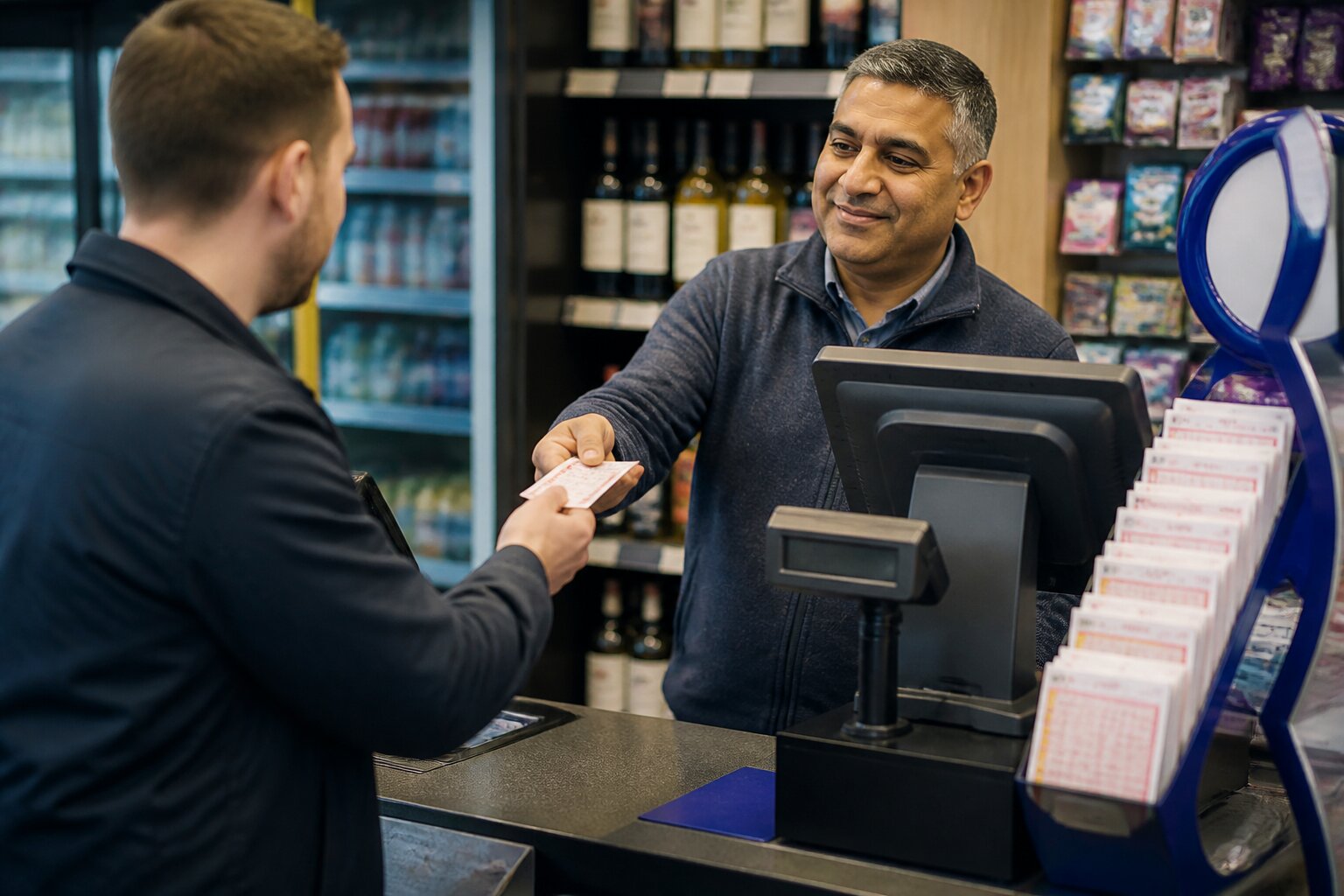
Ever wondered why your local shop sometimes asks you to claim your lottery prize somewhere else? Many winners find the payout process baffling, especially once prize values rise above what a typical till can handle.
Knowing how payout limits work helps you plan where to claim and avoids awkward moments at the counter. We’ll explain the usual maximums, how to claim different amounts and what to expect when a win needs to be handled by the lottery operator.
Read on to find clear examples and practical guidance so you know exactly where to go when that ticket turns out to be a winner.
Understanding Lottery Retailer Payout Limits
Lottery retailer payout limits are the maximum cash amounts shops or authorised kiosks can pay for winning tickets. Operators set these limits so retailers don’t hold excessive cash, which protects staff and customers and keeps daily business manageable. The exact amount depends on the lottery product and the retailer’s arrangement with the operator; newsagents typically handle small payouts, while larger stores often have higher limits at their customer service desks.
A typical example is a scratchcard win of £80: most shops will pay that on the spot because it fits comfortably within common retailer limits. For larger wins, such as a prize worth several hundred pounds, a shop may either lack the authority or the cash to pay it immediately, and the ticket will need to be claimed through a larger outlet or directly with the lottery operator. That difference between small, in-store payouts and larger operator-handled claims is what we’ll unpack next, including where to go for each type of win.
Why Do Lottery Retailers Have Payout Limits?
Retailers limit payouts mainly for safety and practical reasons. Shops generally keep enough cash for everyday trading rather than large prize payments, so caps reduce the risk of theft and lessen the burden on staff. By restricting over-the-counter payouts, retailers lower the chance of violent crime and protect employees who otherwise could be placed in danger while handling big sums.
There are also regulatory and anti-fraud considerations. The operator and regulators require clear procedures for paying out prizes, and larger sums trigger stronger identity checks and secure handling to prevent money laundering or fraudulent claims. Staff are trained to follow these procedures consistently, so claiming a larger prize becomes a formal process rather than a simple till transaction. Ahead is a look at the common payout amounts you’ll encounter on the high street and where to go depending on your ticket’s value.
What Are the Standard Maximum Payout Amounts in the UK?
Standard retailer payout amounts vary by product and by the retailer’s capacity. For many National Lottery draws and most scratchcards, the common in-store payout limit is £100 at the majority of shops. Some larger stores, particularly supermarkets with a dedicated customer service desk, will pay higher amounts—typically up to £500—if they have the funds and authority to do so.
So, a small win under £100 is usually handled immediately at any licensed shop. If the prize is between about £100 and £500, larger retailers with dedicated lottery counters are the best place to try. For prizes above those values, the claim will need to be made through the lottery operator, either by post, online claim form or at a regional lottery office depending on the amount. The next section explains what to expect when claiming at a retailer and what changes when a prize must be sent to the operator.
Claiming Your Lottery Winnings In-Store
For prizes that fall within a retailer’s limit, the process is straightforward. Present the winning ticket or scratchcard to a licensed outlet, where staff will verify it by scanning or visually checking the ticket. Shops may request identification if there is any uncertainty about age or identity; acceptable documents usually include a passport, driving licence or recognised PASS card.
Once validated, prizes within the shop’s authorised amount are paid in cash. Keep your ticket secure until you have received the payment, because surrendering the physical ticket is part of the validation. Larger shops able to pay up to a higher limit will typically handle slightly bigger wins at a customer service desk and may have different ID checks and record-keeping procedures.
If your prize is larger than the retailer can pay, the next section outlines how claims are completed through the lottery operator and the safeguards that come with those larger payments.
What Happens If You Win More Than the Retailer Maximum?
Prizes exceeding a retailer’s maximum must be claimed directly with the lottery operator. For medium-sized wins—often defined as several hundred to tens of thousands of pounds—the operator generally requires a completed claim form and the original ticket sent by secure, tracked post, or an in-person appointment at a regional office. For larger sums, the operator will carry out further verification, including identity and address checks, to ensure the claim is legitimate and handled securely.
Payment for operator-processed claims is made by cheque or bank transfer rather than cash, and processing times are longer because of these extra checks. The aim is to protect claimants and the wider public interest by ensuring funds reach the correct person in a safe, documented way. The following section compares these routes so it’s clear which one suits a particular prize level.
Differences Between Retailer and National Lottery Payouts
The key contrast is speed and formality. Retailers provide convenience: quick validation and immediate payment for smaller wins with basic checks. Direct claims through the lottery operator are more formal, involving documentation, secure transport of the ticket in many cases, and thorough identity checks before a bank transfer or cheque is issued.
Retailer payouts are designed around day-to-day retail operations and are therefore capped. Operator claims are structured to handle larger sums, so they include stronger verification and a recorded payment trail. Both pathways exist to ensure prizes are paid correctly; smaller wins use the retail route for convenience, while larger wins shift to the operator for security and compliance. Next, we’ll look at whether limits can be changed and how splitting claims is treated.
Can You Increase Your Payout Limit or Split Claims?
Payout limits are fixed by the operator and enforced by retailers; customers cannot request a higher over-the-counter payment. Staff are not authorised to exceed these limits, even if the retailer has the cash available. This prevents irregular practices and maintains consistent, secure handling of payouts.
Similarly, splitting a single winning ticket’s value into multiple smaller claims is not permitted. Each ticket represents one claim and must be processed in full under the relevant rules. It is, however, perfectly acceptable to claim separate small wins from different tickets individually, provided each claim is within the retailer’s authorised amount. The purpose of these rules is to maintain clear, auditable handling of prize payments and to protect both players and retailers from disputes or fraudulent activity.
The Bottom Line: Navigating Lottery Retailer Limits
Retailer payout limits exist to balance convenience with safety and regulatory compliance. Smaller prizes are usually paid quickly at local shops; larger prizes move into a formal claim process with the lottery operator, where identity checks and secure payment methods are used. Knowing these distinctions helps you choose the right place to claim and avoids delays.
Always keep winning tickets safe until they are validated and follow the operator’s instructions for sending or presenting tickets where required. Players must be 18 or over to buy and claim lottery tickets. If you ever need support with gambling-related concerns, organisations such as BeGambleAware and GamCare provide confidential advice and information.
Understanding the process ensures your win is handled properly and gives you confidence about where to go next when a ticket turns out to be a winner.
**The information provided in this blog is intended for educational purposes and should not be construed as betting advice or a guarantee of success. Always gamble responsibly.