
Ever stood by a spinning wheel and wondered how many numbers are actually in play? That question turns up more often than you might expect, partly because different versions of the game use different wheel layouts.
The answer matters beyond trivia: which wheel you play on changes the odds and the expected return over time. Read on to see what distinguishes one wheel from another and why a single extra slot can make a noticeable difference.
What Is a Roulette Wheel & How Is It Set Up?
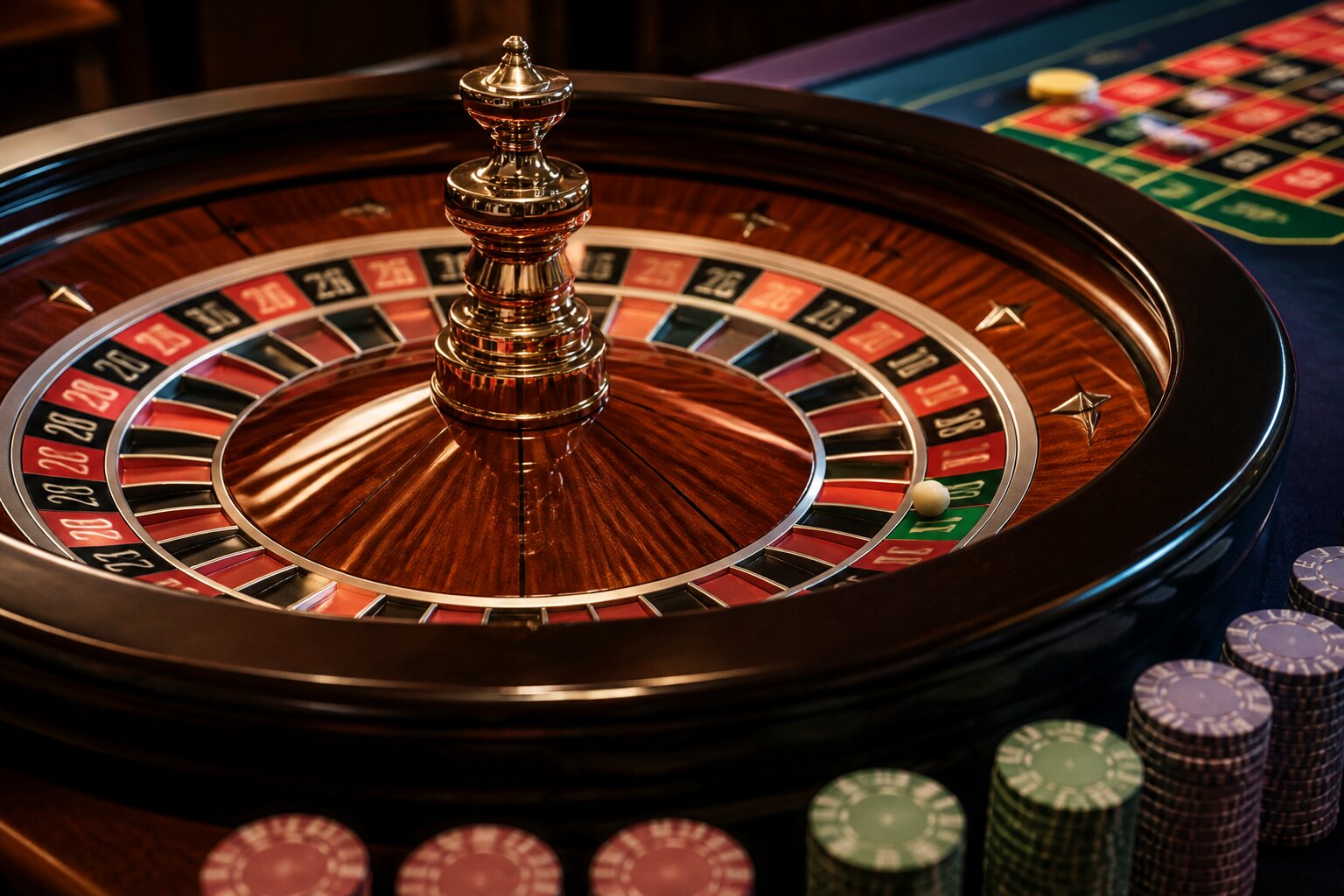
A roulette wheel is the circular, spinning component around which the game is played. Around its rim are evenly spaced pockets, each holding a single number that corresponds to a possible result when the ball comes to rest. The arrangement of numbers and colours is deliberate, not sequential, so that high and low, odd and even, and red and black are spread around the wheel.
Every number from 1 to 36 appears exactly once and alternates between red and black, while the zero or zeroes are coloured green and sit outside that pattern. The zero is not considered odd or even, nor is it red or black, and it modifies how many outcomes are regarded as winners for certain bets.
This physical layout — numbers, colours and spacing — is central to how the game works and leads naturally into the main wheel types used in casinos and online play.
Differences Between European & American Roulette Wheels
Two main wheel types are commonly encountered: European and American. They differ primarily in how many green zero pockets they include, and that difference affects the balance of the game.
European wheels have 37 pockets: 1 to 36 plus a single zero. American wheels contain 38 pockets by adding a double zero (00). The extra pocket on the American wheel increases the number of possible outcomes for every spin and therefore widens the casino’s edge.
These distinctions are reflected both in the wheel’s appearance and in the odds for standard bets. Next, we’ll look at why some wheels stick to 37 pockets and what the extra double zero actually changes in practice.
Why Do Some Roulette Wheels Have 37 Numbers?
European-style wheels use 37 pockets for historical and structural reasons: the single zero simplifies the betting layout and produces a lower house edge than a wheel with two zeroes. That configuration is common in many casinos across Europe and in numerous online versions aimed at the same market.
A wheel with 37 pockets still balances the distribution of colours and number ranges while giving players slightly better statistical chances on wagers that cover roughly half the wheel, such as red/black or odd/even.
What Is Special About the 38th Slot in American Roulette?
The 38th slot, labelled 00, appears on American-style wheels and is also green. Adding this extra pocket keeps the arrangement of 1–36 intact but increases the number of non-winning pockets for bets that would otherwise cover half the wheel.
Because the extra slot raises the proportion of losing outcomes for many common bets, the expected return for play shifts, which is why players often notice a difference in long-term results between the two wheel types.
Are the Numbers on Every Roulette Wheel the Same?
Roulette wheels of the same type use a fixed number sequence, but that sequence differs between European and American wheels. The order around the wheel is chosen to spread contrasting numbers and colours evenly, rather than following numerical order, so consecutive pockets rarely have similar characteristics.
Online versions and live-dealer games generally follow the same publicised layouts as their physical counterparts. Some themed or novelty tables may use alternative designs; when they do, the rules and layout are presented clearly before play begins so anyone can see what they are choosing.
Having clarified how layouts vary, the next section explains why the count of pockets matters for the odds and expected returns.
Why Does the Number of Slots Matter?
The number of pockets determines how many possible results exist on each spin, and that directly affects the probability of winning particular bets. For example, on a 37-pocket wheel a bet covering 18 pockets — such as red or black — wins if the ball lands in one of those 18 pockets out of 37. On a 38-pocket wheel, the same bet wins 18 times out of 38.
That difference changes the house edge: a single zero yields a smaller edge than a wheel with both zero and double zero. Over many spins, that percentage point difference compounds, which is why players who compare wheels sometimes prefer the single-zero layout for its more favourable mathematics.
Although the numbers shape the odds, every gambler should be aware of the statistical nature of returns and set play limits accordingly.
Roulette Wheel Numbering: Myths vs Facts
There are a few common misconceptions about how roulette wheels are numbered and how they operate.
-
Myth: All wheels use the same number order.
Fact: European and American wheels each use their own fixed sequence designed to balance values and colours around the rim. -
Myth: The numbers are randomly placed on the wheel.
Fact: The sequence is intentional to keep the wheel balanced in terms of high/low and odd/even distribution. -
Myth: Online and land-based wheels are always identical.
Fact: Online and live-dealer games usually mirror standard layouts, but alternative versions can exist and should be described before play. -
Myth: Some wheels include special numbers not found elsewhere.
Fact: Regulated tables use only 1–36 plus one or two zeros; any themed variations are clearly advertised.
Understanding these points removes a lot of the mystery around wheel layouts and helps when choosing which game to play. With the layout and its consequences clear, you can make an informed choice about where to play and what to expect from the odds.
Enjoy Casino Games at Rose Slots
We invite you to explore the entertainment on offer with us at Rose Slots. Play on your own terms and enjoy what our site has to offer, whenever it suits you.
Getting started is easy: just create your account, make a deposit and you will be set to play. We look forward to welcoming you.
**The information provided in this blog is intended for educational purposes and should not be construed as betting advice or a guarantee of success. Always gamble responsibly.